Enteral route
Microorganisms from the mouth can travel through swallowing into the gastrointestinal tract.
The mouth and gastrointestinal tract are directly connected, but that does not mean every oral microbe colonizes the gut or that an oral-health supplement automatically improves gut health. Current research focuses on microbial translocation, gut “oralization,” host barriers and disease-associated changes.
Use these tools to revisit or compare this page as part of your oral-health research.

The oral-gut connection is biologically real, but current evidence does not justify assuming that every oral-health supplement improves gut microbiome composition or gastrointestinal disease. Keep oral-care benefits and gut-health claims separate unless product-specific evidence supports both.
View Current Dentolyn OfferAffiliate disclosure: if you use our product link, this site may earn a commission. Commercial relationships do not change the evidence standards used on this page.

Oral microorganisms are swallowed continuously and can reach the gastrointestinal tract. In healthy conditions, stomach acid, bile, resident gut microbes, mucus and immune defenses limit persistent colonization. Disease or ecological disruption can weaken those barriers and make oral-derived organisms more relevant.
Microorganisms from the mouth can travel through swallowing into the gastrointestinal tract.
Oral inflammation can allow microbial products or organisms to access the bloodstream, creating another possible connection.
Whether oral microbes persist in the gut depends on host defenses, gut ecology, disease state and the characteristics of the microorganism.
The strongest recent literature focuses on microbial translocation, gut oralization and disease-associated conditions rather than broad claims that oral supplements improve gut health.
A 2026 review in the Journal of Periodontal Research describes increased colonization by typically oral microorganisms in the gut of people with gastrointestinal disorders and discusses how oral pathobionts may overcome normal host barriers.
A 2025 review notes that oral species may reach and sometimes colonize the gut, particularly when gut dysbiosis or chronic inflammatory disease alters ecological barriers.
Recent literature describes enteric, bloodstream and immune-mediated routes, while emphasizing that body-site specificity remains a core feature of a healthy microbiome.
Evidence that oral microbes can influence the gut does not prove that Dentolyn, or any other oral-health supplement, improves gastrointestinal disease or produces a defined gut-microbiome outcome.
The oral-gut axis depends on the characteristics of both microbial communities and on host barriers between them.
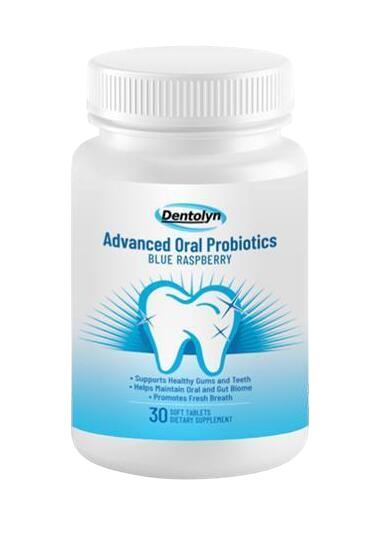
Dentolyn is best evaluated as an oral-health supplement. The merchant positions it in relation to oral and gut microbiome support, but the project materials reviewed here do not establish finished-product clinical evidence showing that Dentolyn changes the gut microbiome or treats gastrointestinal disease.


A refund guarantee can reduce purchase risk, but it is not evidence that a product changes oral-gut microbial communication. Confirm current terms on the merchant page.
If Dentolyn fits your oral-health routine, review the current formula and merchant terms. Do not treat the oral-gut axis alone as evidence that the product improves digestive health.
Check Current Dentolyn OfferThe oral-gut axis describes the biological connection between the microbial ecosystems of the mouth and gastrointestinal tract. The two environments are physically connected because saliva and oral microorganisms are swallowed throughout the day. They can also interact through inflammatory signaling, immune pathways and, in some circumstances, the bloodstream.
Despite that connection, the oral and gut microbiomes remain distinct ecosystems. A healthy gastrointestinal tract normally maintains strong body-site specificity. Organisms adapted to the mouth do not automatically become stable members of the intestinal microbiome simply because they are swallowed.
The most obvious route is enteral. Oral microbes enter saliva, are swallowed and pass through the stomach toward the intestine. Most face multiple barriers along the way, including gastric acid, bile, mucus, resident gut microbes and immune defenses. These barriers reduce the probability that oral organisms will survive and establish persistent populations in the gut.
A second route is hematogenous. Periodontal inflammation can increase vascular permeability and expose the circulation to microbial products or organisms from inflamed oral tissues. This route is important in research on systemic inflammation and oral-systemic associations.
Recent researchers increasingly use the term gut oralization to describe increased detection or colonization of typically oral microorganisms in the gastrointestinal tract. A 2026 review by Ebihara and Kamada highlights this phenomenon in inflammatory bowel disease and colorectal cancer and discusses how certain oral pathobionts may possess adhesion or metabolic traits that help them overcome normal host defenses.
This is a disease-focused concept. It should not be reframed as evidence that more oral bacteria in the gut is inherently beneficial. In many of the conditions being studied, oralization is associated with dysbiosis or pathology rather than health.
Periodontitis can alter the oral microbial community and increase the abundance of disease-associated organisms. It also creates chronic inflammation and can increase the amount of microbial material entering saliva or the bloodstream. This makes periodontal disease particularly relevant to oral-gut axis research.
A key practical implication is that maintaining periodontal health may matter beyond the mouth, but the evidence does not justify claiming that treating periodontal disease will prevent a specific gastrointestinal condition. Association, mechanism and clinical outcome remain different levels of evidence.
A 2025 review by Colombo and colleagues summarizes evidence that oral species can translocate to the gut, particularly in inflammatory chronic diseases. It also emphasizes that some overlap between oral and gut microbiomes can occur without loss of body-site specificity or disease. This is an important caution against treating the presence of an oral organism in the gut as automatically abnormal.
Another recent review on the oral-gut microbiota axis discusses enteral, bloodstream and immune pathways. These models are increasingly useful for explaining how oral inflammation may interact with systemic conditions, but they do not prove that a commercial supplement can meaningfully alter those pathways.
Oral microorganisms are more likely to persist when the gut environment itself has changed. Dysbiosis, inflammation, altered mucus or changes in host immunity can create ecological opportunities that are less available in a healthy intestine. This helps explain why oral-derived organisms are more commonly discussed in the context of inflammatory and neoplastic gastrointestinal disease.
The direction of causality can also be difficult to establish. Disease may allow oral organisms to colonize the gut, oral organisms may contribute to disease mechanisms, or both processes may reinforce one another.
The phrase oral-gut axis is increasingly used bidirectionally because systemic metabolism, immune signaling and microbial metabolites can theoretically influence oral conditions as well. However, the strength of evidence differs by mechanism and disease. Many proposed links remain under investigation.
For consumers, the safest interpretation is that the mouth and gut are connected biological systems, but product claims should still be evaluated separately for oral and gastrointestinal outcomes.
Diet is one of the clearest shared environmental influences. Foods and beverages first interact with oral tissues and microbes, then influence the gastrointestinal tract after swallowing. High-frequency sugar exposure can alter plaque ecology, while overall dietary pattern and fiber intake can influence gut microbial metabolism.
This does not mean the same diet produces identical microbial effects in both sites. Each habitat has different oxygen levels, pH, surfaces and nutrient conditions.
Probiotics are sometimes marketed using broad microbiome language, but evidence should be matched to the specific strain, dose, delivery route and outcome. A strain studied for oral halitosis cannot automatically be assumed to improve gut inflammation, and a gut probiotic cannot automatically be assumed to colonize oral surfaces.
Dentolyn is especially important to distinguish here because the current reviewed formula does not identify a live probiotic strain. It should therefore not be presented as an oral probiotic or as a probiotic intervention for the oral-gut axis.
This is a plausible research question, but the answer is not yet broad enough to support sweeping consumer claims. If periodontal treatment reduces the burden of disease-associated oral microbes, it may theoretically reduce one source of microbial or inflammatory pressure. However, gastrointestinal disease is multifactorial and requires disease-specific clinical evidence.
The practical recommendation remains straightforward: maintain good oral health because oral disease itself deserves prevention and treatment. Do not rely on an unproven gut benefit as the primary reason to care for the mouth.
Dentolyn is positioned by the merchant around oral-health and microbiome support. The current reviewed formula includes xylitol, vitamin C, vitamin B6, iodine, chlorella and clinoptilolite zeolite. Those formulation facts do not establish that the finished product changes gut microbial composition.
Accordingly, the most defensible placement is as an optional oral-wellness supplement used alongside established dental care. Claims about inflammatory bowel disease, colorectal cancer, metabolic disease or other systemic conditions would exceed the evidence available for the finished product.
Persistent abdominal pain, blood in stool, unexplained weight loss, prolonged diarrhea, recurrent vomiting, significant changes in bowel habits or known inflammatory bowel disease should be evaluated medically. Oral-health supplements are not substitutes for gastrointestinal diagnosis or treatment.
Likewise, persistent gum bleeding, loose teeth, severe bad breath, swelling or oral pain deserve dental evaluation. The oral-gut axis is a research framework, not a reason to delay appropriate clinical care.
The Oral-Gut Axis: Bidirectional Interactions Between Microbiome and Diseases. Published in 2026. PMID 42084201. This review examines gut oralization, oral pathobionts, host barriers and disease-associated ectopic colonization.
Link Between Oral and Gut Microbiomes: The Oral-Gut Axis. Published in 2025. PMID 40111686. This review summarizes oral-to-gut translocation, body-site specificity and microbial signatures associated with chronic inflammatory disease.
The oral-gut microbiota axis: a link in cardiometabolic diseases. Published in 2025. PMID 39794340. This review discusses enteric, hematogenous and immune-mediated pathways connecting oral and gut microbial ecosystems.
Research Progress on the Oral-Gut Axis in Inflammatory Bowel Disease. Published in 2025. PMID 41184085. This review focuses on oral-derived microbial translocation and potential mechanisms in IBD.
Oral Microbiome: A Review of Its Impact on Oral and Systemic Health. The supplied MPS project reference provides background on oral dysbiosis, periodontal disease and systemic associations.
If Dentolyn fits your oral-health routine, confirm the current formula, serving directions, pricing, shipping and guarantee details on the merchant page. Treat gut-health claims as unestablished unless finished-product evidence becomes available.
Check Current Dentolyn Offer