
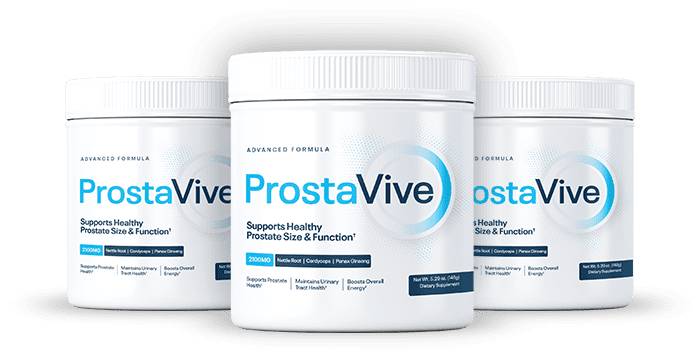
Clinical evidence review
ProstaVive Clinical Evidence: What Has Actually Been Studied?
The central question is whether research exists on the finished product or only on individual ingredients. Those are not interchangeable.
Save or follow this source
Add Male Performance Supplements to Google Preferred Sources or open this page in your preferred AI tool.
Source-checkedNo fabricated ratingsMerchant claims labeled
Affiliate disclosure: MPS may receive compensation from qualifying purchases. Commercial relationships do not convert merchant claims or testimonials into independent evidence.
Trust verification
Ingredient studies are not a product trial
A clinically studied ingredient can support biological plausibility without proving the complete multi-ingredient formula.
Published Products
Explore all current MPS evidence-led product reviews.

Finished-product RCTNot identified in reviewed evidence
Nettle rootDirect BPH/LUTS human research
Tongkat AliBroader male-health research
Evidence standardDose, extract and endpoint matter
ProstaVive clinical evidence ladder: ingredient research sits below finished-product validation
The strongest interpretation comes from ranking evidence by how closely it matches the commercial product. Mechanism and ingredient studies can support plausibility, while direct testing of the exact formula would provide the strongest product-level evidence.
| Evidence level | What it can support | Limit for ProstaVive |
|---|---|---|
| Mechanistic rationale | Why an ingredient may be relevant to urinary, prostate or broader male-health pathways. | Does not establish a meaningful finished-product benefit. |
| Ingredient human studies | Whether a defined ingredient affected a relevant outcome in a studied population. | Results depend on preparation, dose, duration and endpoint. |
| Formula matching | Whether the commercial label can be compared with the researched intervention. | Weak disclosure or differing preparations reduce transferability. |
| Finished-product trial | Direct evidence for ProstaVive itself. | Without credible direct testing, stronger product-efficacy claims remain limited. |
Interpretation: ProstaVive can contain evidence-linked ingredients without the finished product itself being clinically validated.
Has the complete ProstaVive formula been clinically proven?
MPS did not find a peer-reviewed randomized clinical trial of the complete commercial ProstaVive formula in the evidence reviewed for this project. That means the strongest evidence discussion must stay at the ingredient level unless the manufacturer publishes a finished-product trial that can be independently verified.
Which ingredient has the clearest prostate-related human evidence?
Nettle root is the most directly relevant ingredient in the current formula for BPH-associated lower urinary tract research. A randomized placebo-controlled trial involving 620 men reported improvements in symptom and urinary-flow measures. That is evidence for the studied nettle preparation, not direct proof of the complete ProstaVive formula.
What about Tongkat Ali?
Tongkat Ali has systematic-review literature focused on male sexual health, testosterone-related outcomes and broader male-health use. Those outcomes are relevant to the formula's wider male-vitality positioning, but they should not be converted into a claim that Tongkat Ali clinically treats BPH.
What about ashwagandha, fenugreek and maca?
Each has human research in male populations, but the outcomes differ—stress, exercise, hormones, sexual function or desire. They are not all prostate ingredients, and combining them does not create a single unified clinical endpoint.
Why dose and extract matter
Clinical research uses specific preparations and doses. If a commercial product uses a different extract or does not disclose enough detail to compare its serving with the research, the inference becomes weaker.
What would stronger finished-product evidence require?
- A randomized controlled trial of the current commercial formula.
- A formulation identical to the product sold to consumers.
- Validated outcomes such as IPSS if prostate/urinary effects are claimed.
- Transparent adverse-event reporting.
- Appropriate placebo or comparator controls.
- Independent replication.
What merchant testimonials add
Testimonials can describe individual customer experiences. They do not solve the clinical-evidence gap because they are uncontrolled, selectively presented and not designed to isolate treatment effect from placebo response, natural variation or other factors.
Bottom line
ProstaVive contains ingredients with human research, including nettle root with direct BPH/LUTS relevance and several ingredients studied for broader male-health outcomes. The evidence does not justify treating those separate studies as a randomized trial of the complete ProstaVive formula.
Next-step navigation