
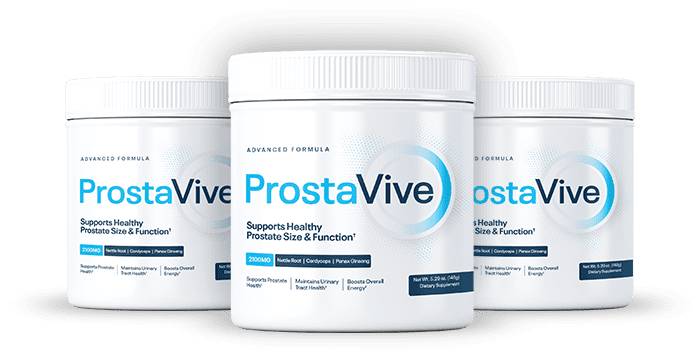
ProstaVive ingredient analysis
ProstaVive Ingredients: What Each Ingredient Is Actually Studied For
The formula combines prostate-relevant, male-health and nutritional ingredients. This page separates those evidence categories instead of blending them together.
Save or follow this source
Add Male Performance Supplements to Google Preferred Sources or open this page in your preferred AI tool.
Evidence-ledNo fabricated ratingsSource-linked
Affiliate disclosure: this page may link to commercial products. MPS may receive compensation from qualifying purchases, but evidence conclusions are based on the cited research.
Published Products
Explore all current MPS evidence-led product reviews.

Direct prostate relevanceNettle root has human LUTS/BPH research
Broader male-health evidenceTongkat ali, ashwagandha, fenugreek, maca
Nutrient contextZinc, magnesium, vitamin D
Key limitationFinished-product efficacy is not established by ingredient names
What is in ProstaVive?
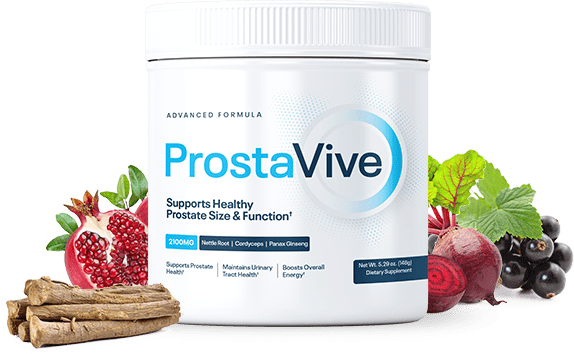
The current ProstaVive formula is marketed as a powdered men's supplement and lists botanical ingredients including boron, tongkat ali, ashwagandha, fenugreek, Panax ginseng, maca root, artichoke extract and nettle root, together with zinc, magnesium and vitamin D. The label should always be checked immediately before purchase because supplement formulations can change.
Which ingredients are most relevant to prostate or urinary research?
Nettle root
Nettle root is the ProstaVive ingredient with the clearest direct connection to BPH-associated urinary symptom research. A randomized placebo-controlled trial in 620 men reported improvements in lower urinary tract symptoms and urinary-flow measures over six months. That evidence belongs to the studied nettle preparation, not automatically to the complete ProstaVive formula.
Zinc, vitamin D and magnesium
These are nutritionally important, but nutrient importance is not evidence that extra supplementation will improve prostate symptoms in a person who is already sufficient. Their practical relevance also depends on the current per-serving amounts and what the user gets from food, multivitamins or other supplements.
Which ingredients are mainly related to broader male-health claims?
Tongkat ali
Human research and meta-analysis have examined testosterone-related outcomes with Eurycoma longifolia. That does not establish a prostate-treatment effect and should not be presented as proof that the finished formula changes testosterone in every user.
Ashwagandha and fenugreek
Both have been studied in male populations for outcomes that can include stress, exercise, sexual function or testosterone-related measures. Their evidence depends on standardized preparations and study-specific doses. These studies are relevant to broader formula positioning, not direct proof of urinary improvement.
Maca and Panax ginseng
Maca has human research related to sexual function and desire, while Panax ginseng has a broad traditional and research history. Again, those outcomes should not be collapsed into a single “prostate performance” claim.
Why ingredient count can be misleading
A formula with ten recognizable ingredients can still be hard to evaluate if the amounts or extract forms do not correspond to the studies cited. The key questions are: How much is present? What extract or standardization is used? Is the amount comparable to human research? Does the serving create nutrient overlap? Are any ingredients likely to interact with medication?
What the ingredient list does and does not prove
The list shows that ProstaVive combines a prostate-relevant botanical with several broader male-health ingredients and essential nutrients. It does not show that the complete formula has been tested in a randomized clinical trial, that every ingredient is present at a study-matched dose, or that the product treats BPH.
Bottom line
The formula is most defensibly interpreted as a multi-ingredient men's wellness supplement with one especially relevant prostate-research ingredient—nettle root—plus several ingredients studied for other male-health outcomes. Buyers should use the Supplement Facts panel and the dedicated “does it work?” review to decide whether that evidence fit is strong enough for their goals.
ProstaVive ingredient evidence map: formula relevance is not finished-product proof
The ingredient list is most useful when each component is separated by the type of evidence it can actually support. Prostate- or urinary-relevant research, broader male-health research and basic nutrient adequacy are different evidence categories, and none by itself proves that the complete ProstaVive formula produces a clinical outcome.
| Ingredient or group | Evidence role on this page | What the evidence cannot prove about ProstaVive |
|---|---|---|
| Nettle root | Most directly connected here to BPH-associated urinary-symptom research. | That the finished ProstaVive formula reproduces results from the studied nettle preparation. |
| Zinc, vitamin D and magnesium | Essential nutrients whose relevance depends partly on intake and baseline status. | That extra intake improves prostate symptoms in users who are already sufficient. |
| Tongkat ali | Human research has examined testosterone-related outcomes. | A prostate-treatment effect or a guaranteed testosterone effect from the complete formula. |
| Ashwagandha and fenugreek | Studied for selected stress, exercise, sexual-function or testosterone-related outcomes depending on preparation. | Direct proof of urinary improvement or finished-product efficacy. |
| Maca and Panax ginseng | Broader male-health or sexual-function context. | That more ingredients or broader positioning increases prostate-specific efficacy. |
For underlying ingredient evidence, use the linked MPS ingredient guides rather than treating manufacturer positioning as independent proof.
Next-step navigation
Use the Evidence to Narrow the Decision
MPS keeps broad health research, ingredient interpretation and product-review content connected without treating sales claims as clinical findings.