
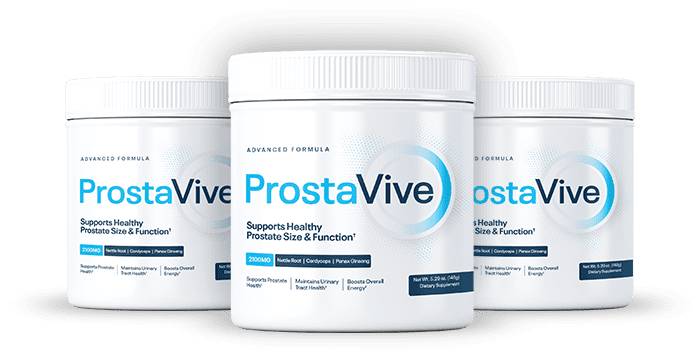
Finished-product evidence review
Does ProstaVive Work? What the Evidence Can and Cannot Show
The useful answer is neither “yes” nor “no” without qualification. This page maps what is supported, what is extrapolated, and what remains untested.
Save or follow this source
Add Male Performance Supplements to Google Preferred Sources or open this page in your preferred AI tool.
Evidence-ledNo fabricated ratingsSource-linked
Affiliate disclosure: this page may link to commercial products. MPS may receive compensation from qualifying purchases, but evidence conclusions are based on the cited research.
Published Products
Explore all current MPS evidence-led product reviews.

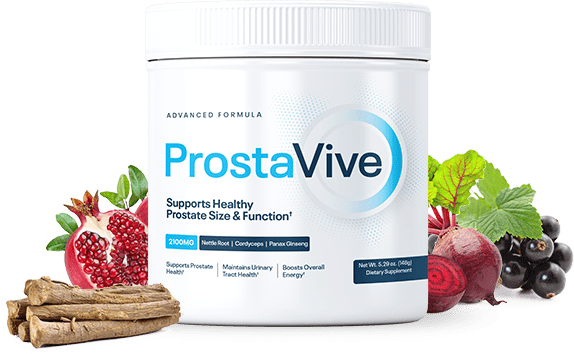
Finished productNo clinical proof assumed
Most relevant ingredientNettle root
Other evidenceMostly broader male-health outcomes
Decision ruleEvidence fit depends on dose and extract
Does ProstaVive work? Use an evidence ladder instead of one global claim
The most defensible answer depends on which layer of evidence is being discussed. Prostate-relevant ingredient studies can support plausibility, while formulation transparency and direct testing determine how confidently that evidence can be transferred to ProstaVive.
| Evidence layer | What it supports | What it does not prove alone |
|---|---|---|
| Ingredient research | Whether a defined ingredient has evidence for a prostate-related, urinary or broader male-health outcome. | That the complete ProstaVive formula produces the same effect. |
| Formula relevance | Whether the current product contains ingredients connected to the target outcome. | That all ingredients contribute to prostate-related outcomes. |
| Form and dose match | Whether the commercial formula resembles the studied preparation and amount. | Research equivalence when the preparation or dose differs. |
| Finished-product evidence | The strongest direct basis for a product-level efficacy conclusion. | Without direct validation, stronger “clinically proven” claims remain unsupported. |
Interpretation: ProstaVive is best assessed as an evidence-mapping problem rather than a simple yes/no efficacy question.
The short answer
There is not enough evidence to say that the complete ProstaVive formula is clinically proven to treat benign prostatic hyperplasia or reliably improve urinary symptoms. There is, however, human research on several individual ingredients. The most directly relevant prostate-related evidence comes from nettle root, while other ingredients are better connected to broader male-health outcomes.
Step 1: separate finished-product evidence from ingredient evidence
This is the central rule. A randomized trial of nettle root is evidence about the nettle preparation studied. A tongkat ali meta-analysis is evidence about tongkat ali preparations in those studies. Neither is automatically a trial of ProstaVive. Combination products can differ in dose, extract form, absorption, interaction and target population.
Step 2: identify the prostate-relevant part of the formula
Nettle root has human trial evidence in men with BPH-related lower urinary tract symptoms. In the 620-participant randomized trial, symptom and urinary-flow measures improved versus placebo. NCCIH still characterizes nettle evidence as limited overall, which is appropriate given the broader size and age of the evidence base.
Step 3: interpret the male-vitality ingredients separately
Tongkat ali has testosterone-related human research. Ashwagandha and fenugreek also have male hormonal or performance studies. Maca has research related to sexual function, and Panax ginseng has broader traditional and clinical literature. These findings can be relevant to why a manufacturer includes those ingredients, but they do not establish that ProstaVive treats an enlarged prostate.
Step 4: account for label transparency
Whether a formula is evidence-aligned depends on how much of each ingredient is present and which standardized extract is used. If a study used a specific preparation and the product uses another, the inference weakens. This is especially important for botanicals where extraction methods can substantially change the chemical profile.
Step 5: distinguish symptom support from disease treatment
BPH is a medical condition. NIDDK describes treatment options including watchful waiting, lifestyle changes, medicines, minimally invasive therapies and surgery depending on symptom severity and complications. A supplement should not be positioned as a replacement for evaluation or evidence-based treatment when symptoms are significant.
What would stronger ProstaVive evidence look like?
- A randomized, blinded trial of the finished formula.
- A clearly defined serving and formulation identical to the commercial product.
- Validated urinary-symptom outcomes such as IPSS.
- Appropriate placebo or comparator controls.
- Adequate duration and transparent adverse-event reporting.
- Independent replication.
Who might still consider it?
A person who understands the uncertainty, has reviewed the label and safety fit, and wants a multi-ingredient supplement rather than a single standardized botanical may still consider ProstaVive. That is a preference and purchasing decision, not a clinical conclusion.
Bottom line
The best-supported statement is that ProstaVive contains ingredients with human research, including nettle root with direct BPH/LUTS relevance, but the complete formula should not be described as clinically proven for prostate disease. The product may be reasonable to evaluate as a supplement, provided the buyer keeps the evidence boundaries clear.
Next-step navigation
Use the Evidence to Narrow the Decision
MPS keeps broad health research, ingredient interpretation and product-review content connected without treating sales claims as clinical findings.