

What is undecylenic acid?
Undecylenic acid is an unsaturated fatty-acid derivative used in topical antifungal products. In the United States, it appears in FDA's OTC topical-antifungal monograph framework, which defines active ingredients and concentration ranges for products marketed under the monograph when all applicable conditions are met.
Its regulatory relevance makes it one of the most important ingredients on the KeraFirm Pro label. At the same time, the existence of a recognized antifungal ingredient does not make every formulation containing that ingredient equivalent to a monograph drug product.
What does the KeraFirm Pro label state?
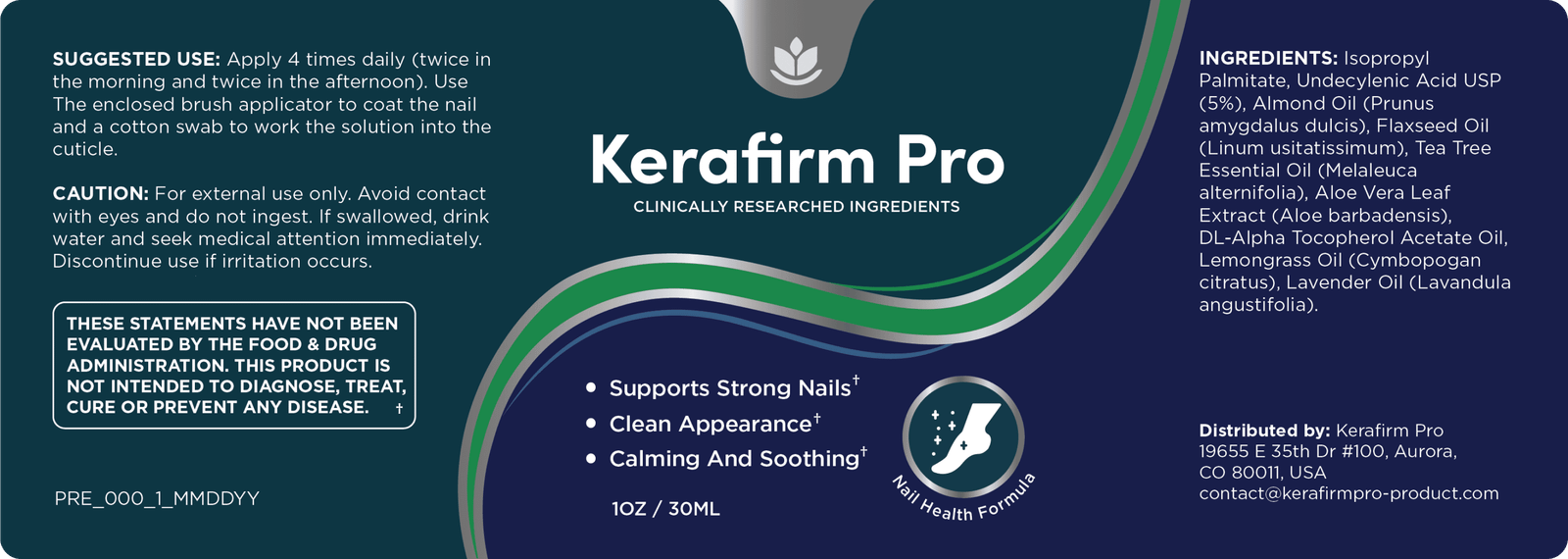
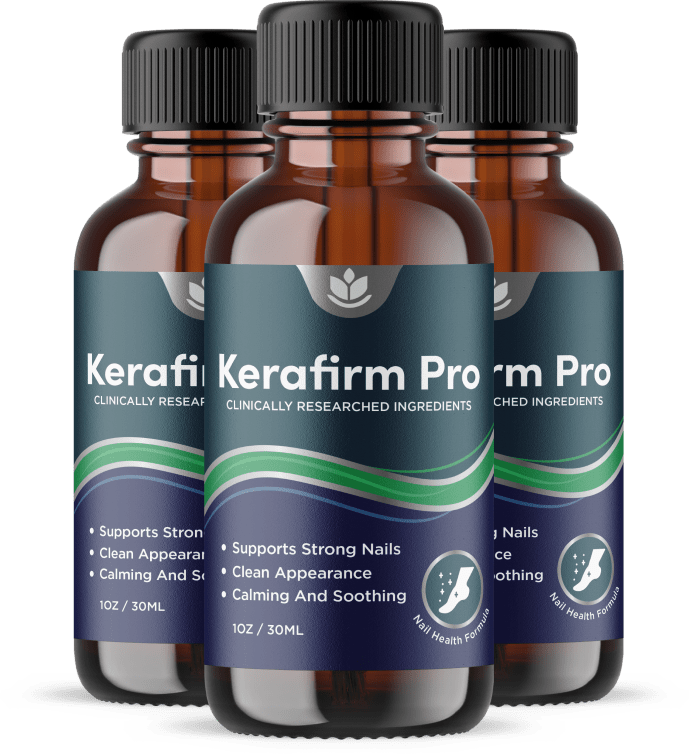
The current printed label supplied for this project lists undecylenic acid USP at 5%. MPS treats that as the product-specific fact. The same label also identifies carrier and botanical ingredients including almond oil, flaxseed oil, tea tree essential oil, aloe vera, vitamin E, lemongrass oil and lavender oil.
Merchant promotional materials have described a broader ingredient set, but the printed label remains the stronger source when the question is the exact declared concentration of undecylenic acid in the current product.
What does FDA Monograph M005 say?
FDA's OTC Monograph M005 for topical antifungal drug products lists undecylenic acid and undecylenates at a total concentration of 10% to 25%. The monograph framework also governs indications, labeling and other conditions for eligible OTC drug products.
KeraFirm Pro's current 5% label concentration is below that 10% to 25% range. That difference should be stated clearly rather than blurred by simply saying the product “contains an FDA-recognized antifungal ingredient.”
Does being below the monograph range mean 5% cannot have biological activity?
No. A concentration being outside a monograph range does not by itself prove absence of biological activity. It means the FDA monograph cannot be used as a direct shortcut to establish that a 5% formula satisfies the same monograph conditions or supports the same permitted antifungal labeling.
The scientific question and the regulatory question are related but not identical. Biological activity can depend on formulation, solvent, delivery and exposure. Regulatory compliance depends on the defined monograph conditions, labeling and product characteristics.
Why nail penetration matters for undecylenic acid
Onychomycosis often involves fungal organisms beneath or within the nail plate. A topical ingredient must therefore reach the relevant site at an effective concentration. The nail is a dense keratinized barrier, and poor penetration is one reason topical nail treatments can require prolonged application.
This is especially important when interpreting a 5% undecylenic-acid formula. Even if the ingredient has antifungal activity, the finished product's actual delivery through the nail plate, residence time and effective concentration at the infected site determine clinical performance. Those factors require formulation-specific evidence.
Can evidence from 25% undecylenic acid products be transferred to KeraFirm Pro?
No direct transfer should be made. Current OTC-market products exist at higher undecylenic-acid concentrations, including products labeled at 25%. Evidence or regulatory status for those formulations does not establish the same performance for KeraFirm Pro at 5%.
A useful comparison can still be made at the level of concentration, dosage form, label claims and supporting evidence, but the conclusion should remain product-specific.
What does the ingredient contribute to KeraFirm Pro's plausibility?
Undecylenic acid gives KeraFirm Pro a clearer antifungal rationale than a formula composed only of cosmetic conditioning oils. That is a meaningful formulation observation. However, plausibility is not the same as clinical proof.
The appropriate evidence statement is therefore narrow: KeraFirm Pro contains 5% undecylenic acid according to the current label, and undecylenic acid is a recognized topical antifungal ingredient in the FDA monograph framework at higher qualifying concentrations. That does not establish finished-product efficacy for diagnosed onychomycosis.
How does undecylenic acid compare with prescription nail treatments?
Prescription nail-fungus treatments such as efinaconazole, tavaborole and ciclopirox have finished-product clinical evidence and approved labeling specific to their formulations. Their effectiveness is not inferred merely from the presence of an antifungal chemical. They were evaluated as complete drug products.
KeraFirm Pro does not currently have an equivalent evidence base identified in this review. Comparing it with prescription products should therefore focus on evidence structure, formulation and regulatory status rather than implying equal clinical performance.
Does undecylenic acid 5% establish that KeraFirm Pro is FDA approved?
No. The presence of a USP-labeled ingredient does not mean the finished KeraFirm Pro product is FDA approved. OTC monograph drug products also are not “approved” in the same sense as products with individual new-drug applications; they may be marketed when they comply with the applicable monograph conditions and other regulatory requirements.
MPS therefore avoids statements such as “FDA-approved ingredient means FDA-approved product.” Those phrases collapse several different regulatory concepts into one misleading claim.
What is the strongest evidence-based conclusion?
Label fact
KeraFirm Pro currently declares undecylenic acid USP at 5%.
KeraFirm Pro currently declares undecylenic acid USP at 5%.
FDA context
M005 lists undecylenic acid/undecylenates at 10–25% for qualifying monograph topical-antifungal products.
M005 lists undecylenic acid/undecylenates at 10–25% for qualifying monograph topical-antifungal products.
Reasonable inference
Undecylenic acid gives the formula antifungal biological plausibility.
Undecylenic acid gives the formula antifungal biological plausibility.
Not established
The 5% finished KeraFirm Pro formula has not been shown here to be equivalent to a monograph product or to clinically cure onychomycosis.
The 5% finished KeraFirm Pro formula has not been shown here to be equivalent to a monograph product or to clinically cure onychomycosis.
Key missing evidence
Finished-product clinical data and formulation-specific nail-penetration evidence.
Finished-product clinical data and formulation-specific nail-penetration evidence.
Continue through the KeraFirm evidence cluster
KeraFirm Pro master review
Overall finished-product evidence and decision context.
Overall finished-product evidence and decision context.
KeraFirm Pro ingredients evidence
Full current-label and ingredient-by-ingredient analysis.
Full current-label and ingredient-by-ingredient analysis.
KeraFirm Pro nail-fungus evidence
How the product compares with established onychomycosis evidence.
How the product compares with established onychomycosis evidence.
KeraFirm Pro safety and side effects
Topical tolerability and escalation considerations.
Topical tolerability and escalation considerations.
Generic undecylenic acid guide
Broader ingredient and regulatory context.
Broader ingredient and regulatory context.
KeraFirm commercial guide
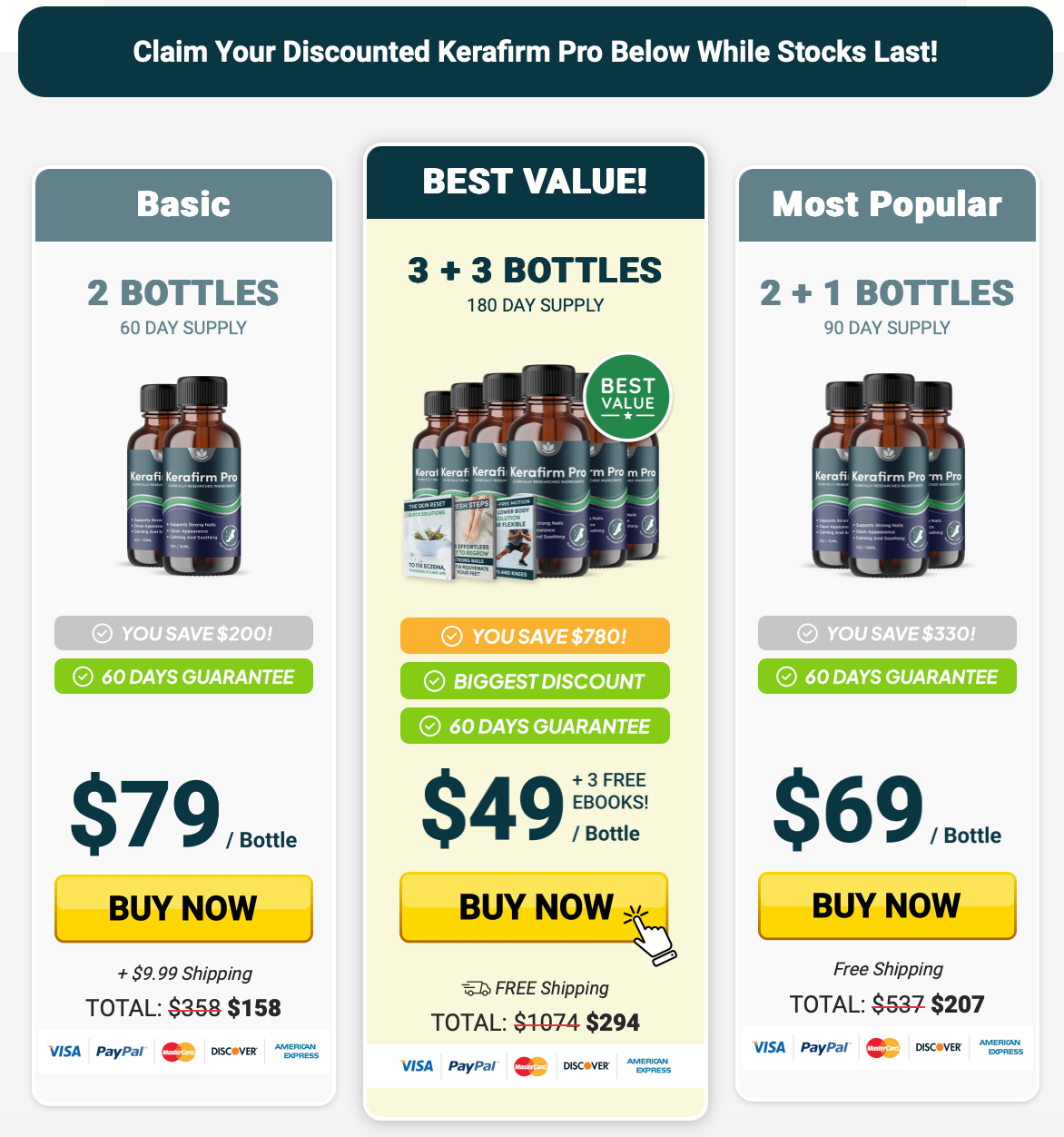
Current packages, pricing and merchant information.
Current packages, pricing and merchant information.