


What is onychomycosis?
Onychomycosis is a fungal infection of a fingernail or toenail. It can cause discoloration, thickening, crumbling, debris beneath the nail and separation from the nail bed. Those signs are common search triggers, but they are not specific enough to prove a fungal infection on their own.
The American Academy of Dermatology emphasizes diagnostic confirmation because nail psoriasis and nail injury can mimic fungus. Dermatologists may clip, scrape or remove debris from a nail and examine the material under a microscope. This matters when evaluating KeraFirm Pro because a consumer product cannot be meaningfully judged as a “nail-fungus treatment” unless the condition being treated is actually fungal.
Where KeraFirm Pro sits in the treatment landscape
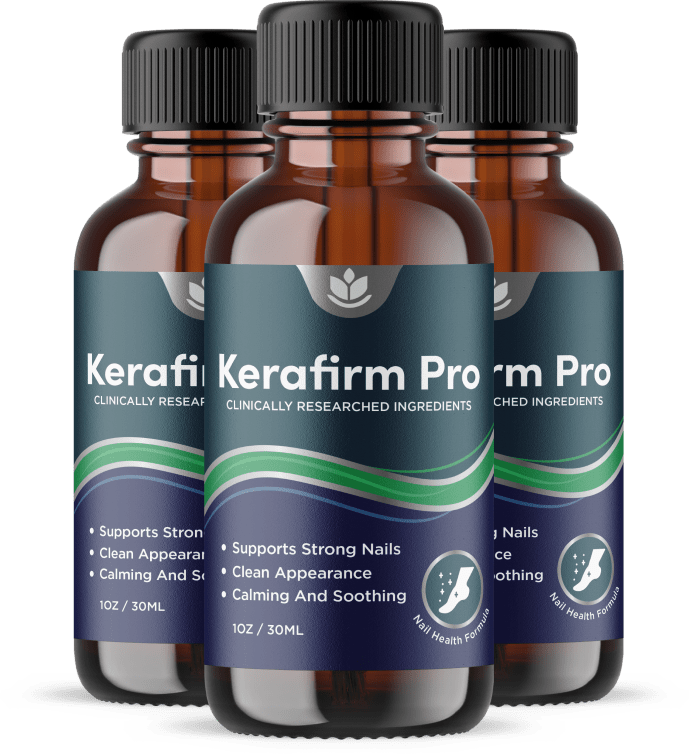
KeraFirm Pro is a topical brush-on consumer product. By contrast, established onychomycosis treatment pathways include prescription topical antifungals such as efinaconazole, tavaborole and ciclopirox, oral antifungals such as terbinafine and itraconazole, and clinician-directed procedures that can thin or remove diseased nail material.
AAD notes that topical prescription treatment often requires prolonged daily use, sometimes around 48 weeks, because nails grow slowly and the medicine must reach the infected tissue. Oral antifungals can have higher efficacy in appropriate patients but also require consideration of liver function, drug interactions and other medical factors. These established therapies provide a useful benchmark for how much evidence is normally expected before a product is described as treating onychomycosis.
Does undecylenic acid 5% make KeraFirm Pro an antifungal treatment?
The current printed label identifies undecylenic acid USP at 5%. Undecylenic acid is a recognized topical antifungal ingredient, but FDA Monograph M005 lists undecylenic acid and undecylenates at a total concentration of 10% to 25% for monograph antifungal drug products.
That does not mean a 5% formulation is necessarily inactive. It means the available monograph framework cannot be used as direct regulatory or efficacy proof for KeraFirm Pro at the concentration printed on its label. Product classification, permitted claims and evidence must be assessed on the actual formulation and labeling rather than on ingredient name alone.
What does tea tree oil add to the evidence?
Tea tree oil is relevant because a randomized double-blind multicenter trial compared 100% tea tree oil with 1% clotrimazole solution in 117 people with culture-confirmed toenail onychomycosis. Culture cure was limited, while partial or full clinical improvement was observed in a larger proportion of participants.
The study is useful for understanding tea tree oil as an ingredient, but it did not evaluate KeraFirm Pro, and the test preparation was 100% tea tree oil rather than a multi-ingredient formulation of undisclosed tea-tree concentration. NCCIH says only a few studies have examined tea tree oil for fungal nail infections and that their quantity and quality are insufficient for firm conclusions.
Why nail penetration matters
The nail plate is a major barrier for topical treatment. A medicine placed on top of a nail must reach the site of infection in an effective concentration. This is one reason established topical treatments have specific formulations, dosing schedules and clinical trials rather than relying solely on evidence that an ingredient can inhibit fungi in a laboratory dish.
AAD notes that clinicians sometimes file or thin the nail to improve penetration of topical medication. It also states that over-the-counter terbinafine cream can treat fungal skin infections but cannot treat nails because it does not adequately penetrate the nail. That example illustrates why “antifungal ingredient” and “effective nail treatment” are different evidence questions.
How strong is the evidence for established topical treatments?
Prescription efinaconazole, tavaborole and ciclopirox have been studied directly in people with onychomycosis. Their labeling, application schedules and safety profiles are based on finished-product evidence. These products still require long treatment periods, and complete cure is not guaranteed, but the evidence structure is fundamentally different from extrapolating from individual botanical ingredients.
Systematic-review evidence also finds that both oral and topical treatments can produce mycological cure, with oral therapies traditionally showing higher success rates while carrying different interaction and systemic-safety considerations. That does not make one route universally preferable; it shows why diagnosis, severity and patient factors matter.
What about lasers, home remedies and “natural” approaches?
AAD states that lasers are FDA cleared or approved for improving the appearance of nails in certain contexts, not as approved treatments for eradicating the fungal infection itself. It also notes that small studies have explored tea tree oil and mentholated ointments, but larger studies are needed before effectiveness and safety can be determined.
This is relevant to KeraFirm Pro because a formula containing botanical oils should not be promoted as clinically established merely because some ingredients have laboratory antifungal activity or appear in small exploratory studies. The finished formulation, concentration and delivery system need their own evidence.
Can appearance improvement prove fungal cure?
No. A nail can look better without a mycological cure, and it can continue to look abnormal after fungus has been cleared because healthy nail must grow out. Clinical appearance, microscopy, culture and other diagnostic measures answer different questions.
This distinction matters when reading product testimonials. A before-and-after appearance claim does not by itself establish that the underlying infection was confirmed before treatment or eliminated afterward.
Who should be especially cautious about self-treatment?
People with diabetes, poor circulation, neuropathy, immune suppression, significant foot disease, pain, drainage or rapidly worsening inflammation should seek professional assessment rather than relying only on a consumer nail product. The concern is not a documented KeraFirm-specific toxicity; it is the higher consequence of delayed diagnosis or secondary complications in vulnerable patients.
Professional evaluation is also appropriate when nail changes persist despite treatment, repeatedly recur, involve several nails, or the diagnosis is uncertain.
Evidence hierarchy for KeraFirm Pro and nail fungus
Highest confidence
Current printed-label facts, established onychomycosis diagnostic standards and evidence from directly studied prescription treatments.
Current printed-label facts, established onychomycosis diagnostic standards and evidence from directly studied prescription treatments.
Moderate contextual relevance
Ingredient-level clinical evidence such as tea tree oil research and regulatory context for undecylenic acid.
Ingredient-level clinical evidence such as tea tree oil research and regulatory context for undecylenic acid.
Lower-confidence inference
Laboratory antifungal activity, merchant explanations and mechanism-based reasoning.
Laboratory antifungal activity, merchant explanations and mechanism-based reasoning.
Unresolved
Finished-product KeraFirm Pro clinical efficacy for diagnosed onychomycosis.
Finished-product KeraFirm Pro clinical efficacy for diagnosed onychomycosis.
Bottom line
KeraFirm Pro has a topical format and ingredients with biologically relevant antifungal context, but the evidence identified here does not establish that the exact commercial formulation treats or cures onychomycosis. Its current 5% undecylenic-acid label concentration should not be equated with the FDA monograph's 10–25% range, and limited tea-tree-oil evidence cannot be transferred directly to this multi-ingredient product.
A more defensible use of the available evidence is to view KeraFirm Pro as a consumer topical nail-care product whose ingredients can be analyzed individually while keeping its finished-product efficacy claim unresolved. Anyone with persistent, painful or high-risk nail changes should prioritize diagnostic confirmation and evidence-based treatment guidance.
Continue through the KeraFirm evidence cluster
KeraFirm Pro master review
Product-level evidence and decision context.
Product-level evidence and decision context.
KeraFirm Pro ingredients evidence
Printed label, undecylenic acid, tea tree oil and formula interpretation.
Printed label, undecylenic acid, tea tree oil and formula interpretation.
KeraFirm Pro safety and side effects
Irritation, allergy, label precautions and escalation signs.
Irritation, allergy, label precautions and escalation signs.
Generic nail-fungus treatment options
Independent treatment overview.
Independent treatment overview.
KeraFirm commercial guide
Current packages, price and merchant information.
Current packages, price and merchant information.