
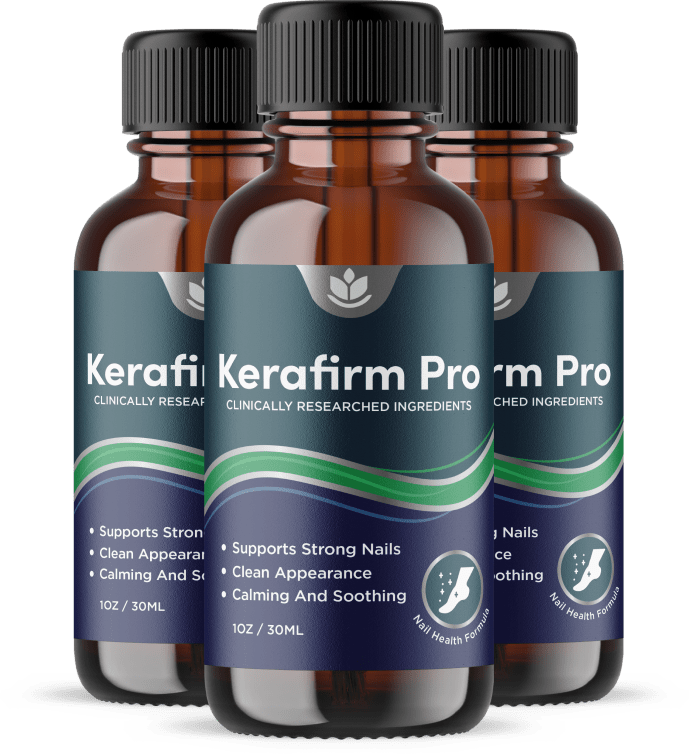





Is KeraFirm Pro considered a low-risk topical product?
Based on the current label and merchant presentation, KeraFirm Pro is intended for topical external use. That generally shifts the most immediate safety considerations toward the skin and nail area rather than systemic exposure. However, “topical” does not mean “risk free.” Essential oils, fragrance-like botanical compounds and other topical ingredients can cause irritation or allergic contact dermatitis in susceptible users.
The available project sources do not establish a finished-product adverse-event rate for KeraFirm Pro. MPS therefore does not assign a numerical side-effect frequency. The correct evidence position is that the product has plausible local tolerability risks based on its formulation, while the actual incidence in users has not been established in a published clinical trial.
Which ingredients are most relevant to irritation or sensitivity?
Tea tree oil, lemongrass oil and lavender oil are among the current printed-label ingredients most relevant to sensitivity because essential oils can irritate skin or trigger contact allergy in some people. NCCIH notes that tea tree oil can cause skin irritation and swelling in some individuals. This safety information applies to tea tree oil as an ingredient and should not be converted into a product-specific adverse-event rate for KeraFirm Pro.
Sweet almond oil is also worth noting for people with a history of nut-related skin sensitivity, while vitamin E and other topical ingredients can occasionally be associated with contact reactions. The label should therefore be checked carefully by anyone with known topical allergies.
What does the current label imply about safe use?
The current merchant material presents KeraFirm Pro as a topical nail formula. The safest use interpretation is to follow the current bottle directions exactly, use only the amount instructed, keep it away from eyes and mucous membranes, and avoid accidental ingestion. If the current merchant or bottle directions change, the current printed label should control rather than older promotional copy.
Application to broken, inflamed or severely damaged skin deserves extra caution. A painful, draining, swollen or rapidly worsening toe or finger should not simply be treated as a cosmetic nail issue.
Can “natural” ingredients still cause side effects?
Yes. Natural origin does not guarantee absence of irritation, allergy or interaction with damaged skin. Essential oils are chemically active mixtures. Their tolerability depends on concentration, formulation, frequency of exposure and individual sensitivity.
This matters for KeraFirm Pro because several ingredients are botanically derived. Their presence may be relevant to the formula's texture, scent, conditioning or biological plausibility, but it also means users with sensitive skin should not assume that botanical automatically means hypoallergenic.
What symptoms should prompt stopping the product?
Stop use and reassess if there is persistent burning, increasing redness, swelling, blistering, significant itching, rash spreading beyond the application area, drainage or worsening pain. A mild transient sensation and a persistent inflammatory reaction are not the same thing, and users should not continue repeated application through a clearly worsening skin response.
Urgent care is appropriate for severe swelling, difficulty breathing or other signs of a serious allergic reaction. Those reactions are not established as common KeraFirm Pro effects; they are general safety escalation signs for topical products and potential allergens.
Why diabetes and poor circulation change the risk calculation
People with diabetes, peripheral vascular disease, neuropathy or impaired circulation should be more cautious with persistent nail and foot problems. The concern is not a documented KeraFirm-specific toxicity. It is that small skin injuries, infection or delayed healing can have greater consequences, and reduced sensation can make irritation or tissue damage harder to detect early.
A persistent abnormal toenail in someone with diabetes is therefore better approached as a health issue that may need professional assessment rather than only as a cosmetic problem.
When should a nail problem be evaluated instead of self-treated?
Professional evaluation becomes more important when the nail is painful, markedly thickened, separating from the nail bed, surrounded by inflamed skin, producing drainage, repeatedly recurring, or failing to improve over time. It is also appropriate when the diagnosis is uncertain. AAD notes that nail psoriasis and nail injury can resemble fungal infection, and clinicians may take nail samples because treatment depends on identifying the cause.
This diagnostic point is central to product safety. The risk of self-treatment is not limited to a topical reaction. It also includes losing time while the wrong condition is being treated.
Does KeraFirm Pro interact with oral medicines?
The project materials do not establish clinically significant systemic drug interactions for the finished topical KeraFirm Pro formula. Because the product is used externally, interaction risk would generally be expected to differ from an oral medicine, but MPS does not infer “no interactions” without product-specific pharmacokinetic evidence.
People using prescription skin or nail medicines on the same area should ask a clinician or pharmacist about combining products, especially if one product changes skin integrity or causes irritation.
What about pregnancy or breastfeeding?
The supplied project sources do not provide adequate product-specific pregnancy or breastfeeding safety data for KeraFirm Pro. That means the appropriate position is uncertainty rather than reassurance. Someone who is pregnant or breastfeeding and considering repeated topical use should check the current label and discuss the specific ingredients with a qualified clinician if there is any concern.
Can side effects be reduced?
Practical risk reduction starts with the label. Use only as directed, avoid over-application, keep the surrounding skin dry and intact where possible, wash hands after application if instructed, and stop if a consistent irritation pattern appears. People with highly sensitive skin may wish to discuss a small-area test with a clinician or pharmacist before regular use.
Do not use another person's bottle or applicator, particularly when there is a possibility of fungal infection, because applicators can contact the nail and surrounding skin.
Safety evidence summary
Most plausible side effects
Local irritation, redness, itching, burning or contact dermatitis.
Local irritation, redness, itching, burning or contact dermatitis.
Most relevant ingredient class
Essential oils and other botanicals can cause sensitivity in some users.
Essential oils and other botanicals can cause sensitivity in some users.
Major evidence gap
No qualifying published finished-product trial has established an adverse-event rate for KeraFirm Pro.
No qualifying published finished-product trial has established an adverse-event rate for KeraFirm Pro.
Important escalation group
People with diabetes, poor circulation, neuropathy, immune suppression or significant foot disease.
People with diabetes, poor circulation, neuropathy, immune suppression or significant foot disease.
Diagnostic caution
Not every discolored or thickened nail is fungal.
Not every discolored or thickened nail is fungal.
Where to continue
For full product evidence, use the MPS master review. For the ingredient-by-ingredient analysis, use the KeraFirm ingredient evidence page. For broader diagnostic and treatment context, use the generic nail-fungus research site.
KeraFirm Pro master review
Finished-product evidence and decision context.
Finished-product evidence and decision context.
KeraFirm Pro ingredients evidence
Label, undecylenic acid, tea tree oil and formula interpretation.
Label, undecylenic acid, tea tree oil and formula interpretation.
Nail-fungus diagnosis
Why confirmation matters before treatment.
Why confirmation matters before treatment.
KeraFirm commercial guide
Current packages, price and merchant information.
Current packages, price and merchant information.