



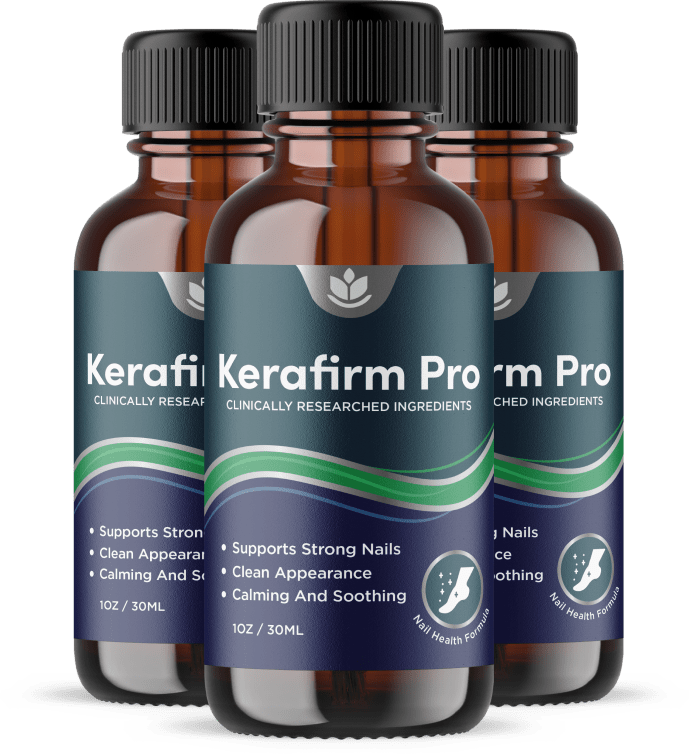
What did this clinical-trial check look for?
The review looked for human research naming KeraFirm Pro or clearly evaluating the same finished formulation. A product-level trial should identify the tested formulation, participant population, intervention, comparator where applicable, treatment duration, outcome measures and adverse events. A citation to an ingredient paper does not meet that threshold.
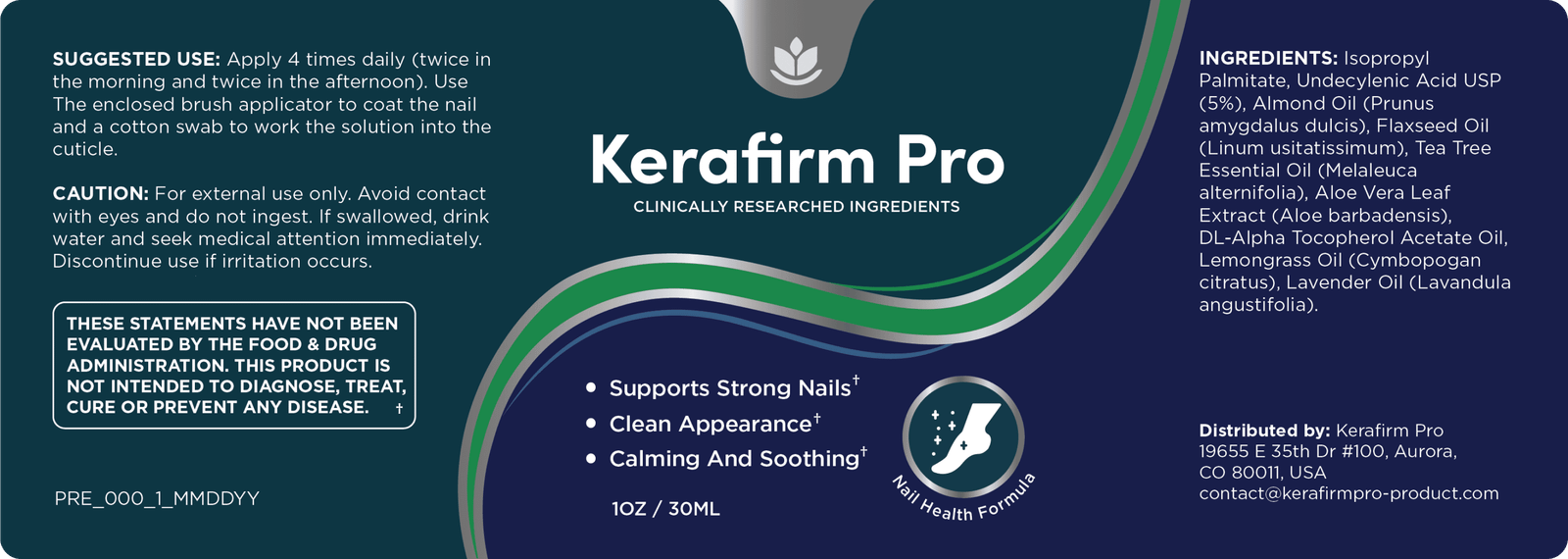
The current merchant research material cites external studies on tea tree oil, vitamin E and essential-oil nail formulas, onychomycosis and other ingredients. Those references can support ingredient context, but they do not establish that the marketed KeraFirm Pro bottle was the intervention studied.
No finished-product KeraFirm Pro trial was identified
As of this review, no qualifying published clinical trial of the finished KeraFirm Pro formulation was identified in the product materials or targeted literature checks. Current KeraFirm informational material also separates ingredient research from finished-product evidence and states that the complete formula has not been evaluated in a published clinical trial.
This finding is deliberately narrow. It does not prove that no internal testing has ever occurred. It means there is no publicly identifiable, qualifying finished-product human trial in the evidence set reviewed here that can be independently assessed.
What evidence exists for tea tree oil?
A randomized, double-blind multicenter trial published in 1994 compared twice-daily 100% tea tree oil with 1% clotrimazole solution in 117 people with culture-confirmed distal subungual onychomycosis. It is genuine human research, but the intervention was 100% tea tree oil, not KeraFirm Pro.
KeraFirm Pro is a multi-ingredient product and the tea-tree concentration on the supplied label is not disclosed. The trial therefore supports a limited ingredient-level evidence statement, not a finished-product claim.
What about the vitamin E and essential-oil nail study?
A 2020 open study evaluated a nail oil composed of vitamin E and essential oils in mild to moderate distal subungual onychomycosis. The study is relevant to the general concept of topical nail oils, but the tested formulation was a different product and the study did not use a randomized controlled design.
It should therefore not be described as a KeraFirm Pro clinical trial. At most, it provides contextual evidence that a separate multi-ingredient nail-oil formulation has been studied in humans.
Does undecylenic acid provide product-trial proof?
Undecylenic acid has long-standing topical antifungal relevance and appears in FDA's OTC antifungal monograph framework at specified concentrations. KeraFirm Pro's current printed label reports undecylenic acid USP at 5%, while the monograph range for qualifying undecylenic acid and undecylenate products is 10% to 25%.
Regulatory recognition of an ingredient does not substitute for a clinical trial of KeraFirm Pro. Concentration, formulation, labeling and nail penetration remain product-specific variables.
Why in-vitro studies are not clinical trials
Laboratory studies can show that an ingredient inhibits fungal growth under controlled conditions. That is useful for mechanism and plausibility. It does not establish that a brush-on product reaches infected nail tissue at an effective concentration, is tolerated over a long treatment period or produces clinically meaningful outcomes in people.
For a nail product, delivery through the keratinized nail plate is particularly important. A strong laboratory result can coexist with poor clinical performance if the active material does not adequately reach the site of infection.
What outcomes should a KeraFirm Pro trial measure?
A credible onychomycosis trial would ideally separate clinical appearance from mycological outcomes. Relevant measures can include negative microscopy or culture, proportion of clear nail, healthy nail growth, complete cure, treatment success and adverse events. Follow-up matters because nails grow slowly and recurrence can occur.
Photographs alone are not enough to establish fungal cure. A healthier-looking nail may still harbor fungus, while a microbiologically cleared nail may take months to grow out visibly.
What trial design would be most informative?
A randomized, blinded or assessor-blinded controlled study would provide stronger evidence than an uncontrolled testimonial series. Participants should have confirmed onychomycosis, the exact KeraFirm formulation should be documented, and the dosing schedule should match real-world instructions. A comparator could be vehicle, standard care or another appropriate topical treatment depending on the study question.
Pre-specified endpoints, transparent handling of dropouts and complete adverse-event reporting would make the results easier to interpret. Registration and publication would further improve transparency.
Can merchant claims substitute for clinical trials?
No. Merchant claims, customer experiences, ingredient explanations and before-and-after images can generate hypotheses or describe individual experiences, but they do not reproduce the controls needed to estimate efficacy. Without diagnostic confirmation, a testimonial may not even establish that the user had fungal nail disease at baseline.
The current merchant presentation also includes a general disclaimer that its statements have not been evaluated by FDA and that the product is not intended to diagnose, treat, cure or prevent disease. That commercial disclaimer is separate from the scientific question of whether a finished-product trial exists.
How should “clinically studied ingredients” be interpreted?
The phrase can be accurate when individual ingredients have appeared in clinical research, but it should not be read as “the finished product is clinically proven.” Tea tree oil and other topical nail formulations have been studied in humans. Those studies used specific concentrations, combinations and protocols that differ from the KeraFirm Pro formula.
MPS therefore distinguishes three evidence levels: an ingredient has been studied; a similar formulation has been studied; the exact finished product has been studied. KeraFirm Pro currently has evidence in the first two categories for selected components and related formulations, but not the third category in the evidence identified here.
Clinical-evidence summary
KeraFirm Pro finished-product trial
No qualifying published human trial identified in this review.
No qualifying published human trial identified in this review.
Tea tree oil
Limited human onychomycosis evidence exists, including a randomized comparison with clotrimazole.
Limited human onychomycosis evidence exists, including a randomized comparison with clotrimazole.
Vitamin E + essential-oil nail formula
A small open human study exists for a different formulation, not KeraFirm Pro.
A small open human study exists for a different formulation, not KeraFirm Pro.
Undecylenic acid
Regulatory and antifungal context exists, but that is not a KeraFirm product trial.
Regulatory and antifungal context exists, but that is not a KeraFirm product trial.
Laboratory studies
Useful for mechanism and plausibility, not finished-product clinical efficacy.
Useful for mechanism and plausibility, not finished-product clinical efficacy.
What would change the MPS conclusion?
The conclusion should be updated if a genuine KeraFirm Pro trial becomes publicly available. The most useful new evidence would identify the exact formula, enroll participants with confirmed nail fungus, describe dosing and duration, report clinical and mycological outcomes, include safety results and provide enough methodological detail for independent evaluation.
Until then, KeraFirm Pro should be discussed as a topical product with some ingredients that have relevant research, rather than as a clinically proven finished treatment.