

Current printed-label ingredient list
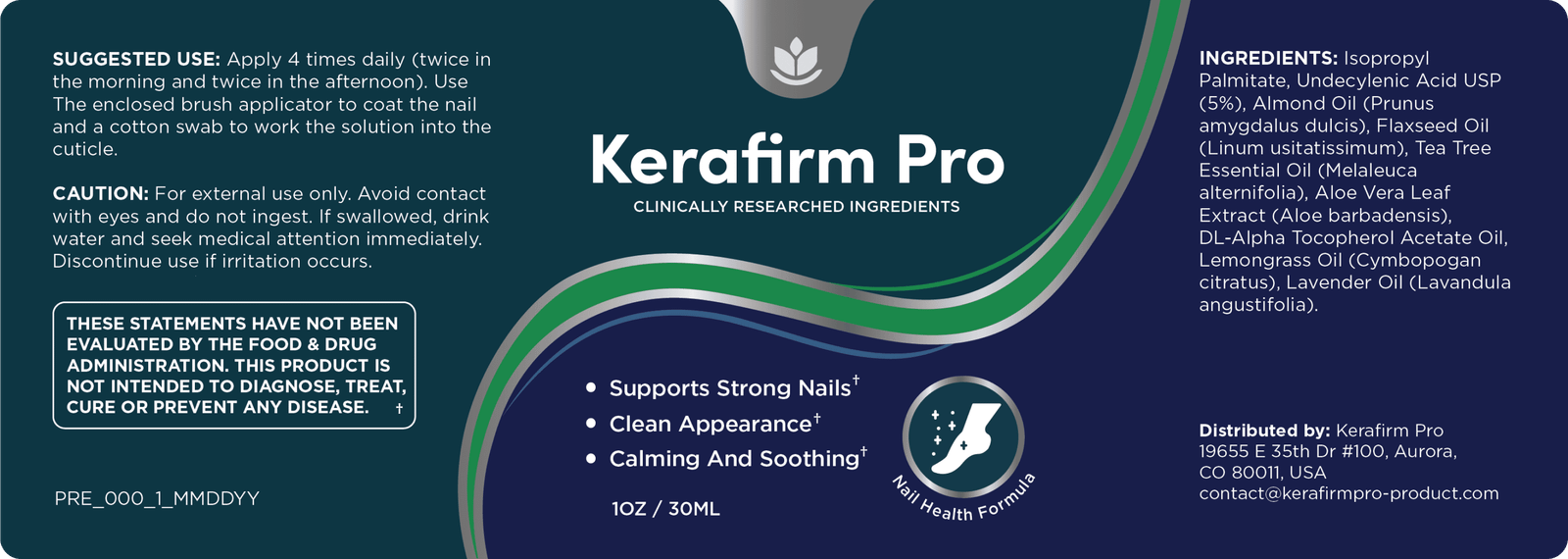
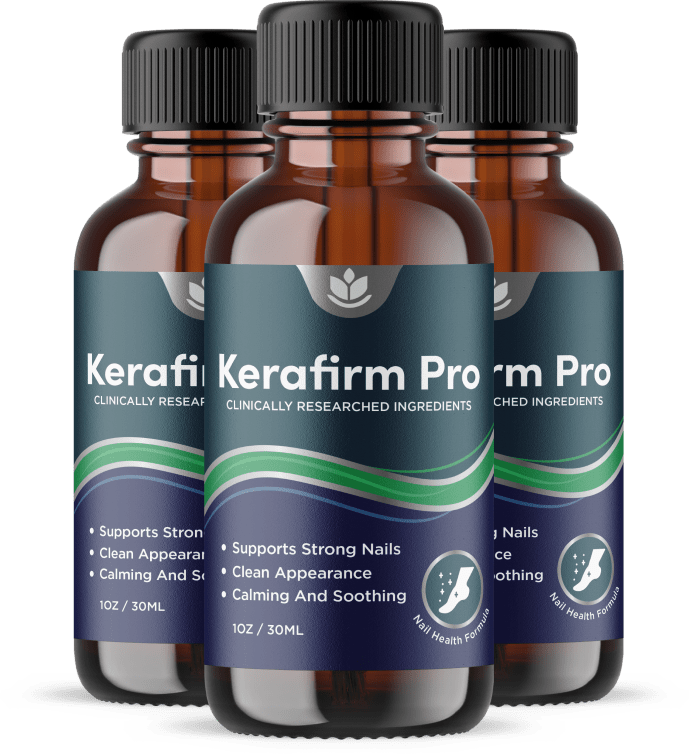
The label supplied for this project identifies isopropyl palmitate, undecylenic acid USP 5%, sweet almond oil, flaxseed oil, tea tree essential oil, aloe vera leaf extract, DL-alpha tocopherol acetate (vitamin E), lemongrass oil and lavender oil. Current merchant promotional material has also named clove, manuka, camphor, menthol, walnut and chia among the formula ingredients. Because the two lists are not identical, this page does not merge them into a single definitive label list.
The distinction matters because evidence should be attached to the exact formulation actually used. A merchant marketing page may describe a broader formulation history or promotional ingredient set, while the printed label is the more direct source for what a bottle currently declares.
Undecylenic acid USP 5%
Undecylenic acid is the ingredient with the clearest formal antifungal regulatory context. FDA's OTC Monograph M005 includes undecylenic acid and undecylenates at a total concentration of 10% to 25% for topical antifungal drug products that meet the monograph conditions. KeraFirm Pro's current printed label reports 5% undecylenic acid USP.
That concentration difference prevents a simple equivalence claim. MPS therefore treats “undecylenic acid 5%” as a verified product-label fact, while the 10–25% FDA range is regulatory context for monograph products. It should not be used to imply that KeraFirm Pro itself is an FDA-approved antifungal treatment or that the finished product has demonstrated the same clinical performance as another undecylenic-acid product.
Tea tree essential oil
Tea tree oil is the best-studied botanical ingredient in the current label for fungal nail disease. A randomized, double-blind multicenter study compared twice-daily 100% tea tree oil with 1% clotrimazole solution in 117 people with culture-confirmed distal subungual onychomycosis for six months. Culture cure rates were low in both groups, while partial or full clinical improvement was reported in a larger proportion of participants.
That study does not test KeraFirm Pro, and its 100% tea-tree preparation cannot be mapped directly onto a multi-ingredient commercial product of undisclosed tea-tree concentration. NCCIH also says only a few studies have examined tea tree oil for fungal nail infections and that the amount and quality of research are insufficient to support firm conclusions.
Vitamin E
Vitamin E is commonly used in topical formulations for conditioning and emollience. The supplied project materials include a separate small open study of a nail oil containing vitamin E and essential oils, but that formula is not KeraFirm Pro and should not be treated as product-level evidence for it. The most defensible role for vitamin E on this page is therefore as a supportive nail- and skin-conditioning ingredient rather than an established antifungal active.
Aloe vera
Aloe vera is widely used in topical skin products for moisturizing and soothing functions. The sources reviewed for this project do not establish aloe vera as a stand-alone clinical treatment for onychomycosis. Its presence can be described as part of the formula architecture without assigning it an antifungal outcome that has not been demonstrated for this product.
Sweet almond oil and flaxseed oil
Sweet almond and flaxseed oils primarily fit a carrier, emollient and conditioning role in a topical formula. Carrier oils can affect spreadability, skin feel and delivery of volatile botanical ingredients. Those practical formulation roles are different from showing that the oils themselves eradicate a fungal infection.
Lemongrass and lavender oils
Essential oils can show antimicrobial activity in laboratory settings, but in-vitro activity is not equivalent to clinical efficacy through a human nail plate. The uploaded botanical review documents broad antifungal activity research involving medicinal plants and plant extracts against dermatophytes, while also concluding that more study is needed. That literature is useful as biological context, not as finished-product proof.
What about clove, manuka, camphor, menthol, walnut and chia?
These ingredients appear in merchant promotional material but are not all present on the printed label supplied for this project. They can therefore be discussed as merchant-described formulation information, but should not be treated as definitively confirmed current label ingredients until the current bottle label or official technical documentation resolves the discrepancy.
This is especially important for evidence mapping. A study involving mentholated ointment, for example, cannot establish KeraFirm Pro efficacy unless menthol is confirmed in the actual current formulation and the finished product itself has been evaluated.
Why ingredient evidence cannot prove the finished product
A finished topical product depends on concentration, solvent system, carrier oils, viscosity, evaporation, penetration through the nail plate, application frequency and interactions between ingredients. Even when one ingredient has plausible antifungal activity, the resulting commercial formulation can have a different effective concentration and delivery profile.
This is why the MPS evidence hierarchy distinguishes a label fact from an ingredient mechanism, an ingredient human trial and a finished-product trial. KeraFirm Pro currently has useful information at the first three levels for some ingredients, but this review has not identified qualifying published clinical evidence on the exact finished formulation.
Ingredient-evidence summary
Undecylenic acid 5%
Strong regulatory relevance at the ingredient level; concentration does not match the 10–25% FDA monograph range.
Strong regulatory relevance at the ingredient level; concentration does not match the 10–25% FDA monograph range.
Tea tree oil
Limited human evidence; not enough to support firm conclusions for fungal nail infection.
Limited human evidence; not enough to support firm conclusions for fungal nail infection.
Vitamin E, aloe, almond and flaxseed oils
Primarily supportive conditioning/formulation roles based on the sources reviewed.
Primarily supportive conditioning/formulation roles based on the sources reviewed.
Lemongrass and lavender oils
Botanical/laboratory context exists, but product-level clinical evidence is not established.
Botanical/laboratory context exists, but product-level clinical evidence is not established.
Where this page fits in the KeraFirm research network
This page is the MPS ingredient-evidence node. The master MPS review evaluates the product as a whole. The dedicated research domain explains individual ingredients and generic nail-fungus treatment topics. The commercial domain covers price, packages, shipping and buying routes.
MPS KeraFirm Pro master review
Full product-level evidence and decision context.
Full product-level evidence and decision context.
KeraFirm ingredient guide
Generic ingredient and formula education.
Generic ingredient and formula education.
Undecylenic acid guide
Ingredient and regulatory context.
Ingredient and regulatory context.
Tea tree oil evidence
Human-study and evidence-limit context.
Human-study and evidence-limit context.
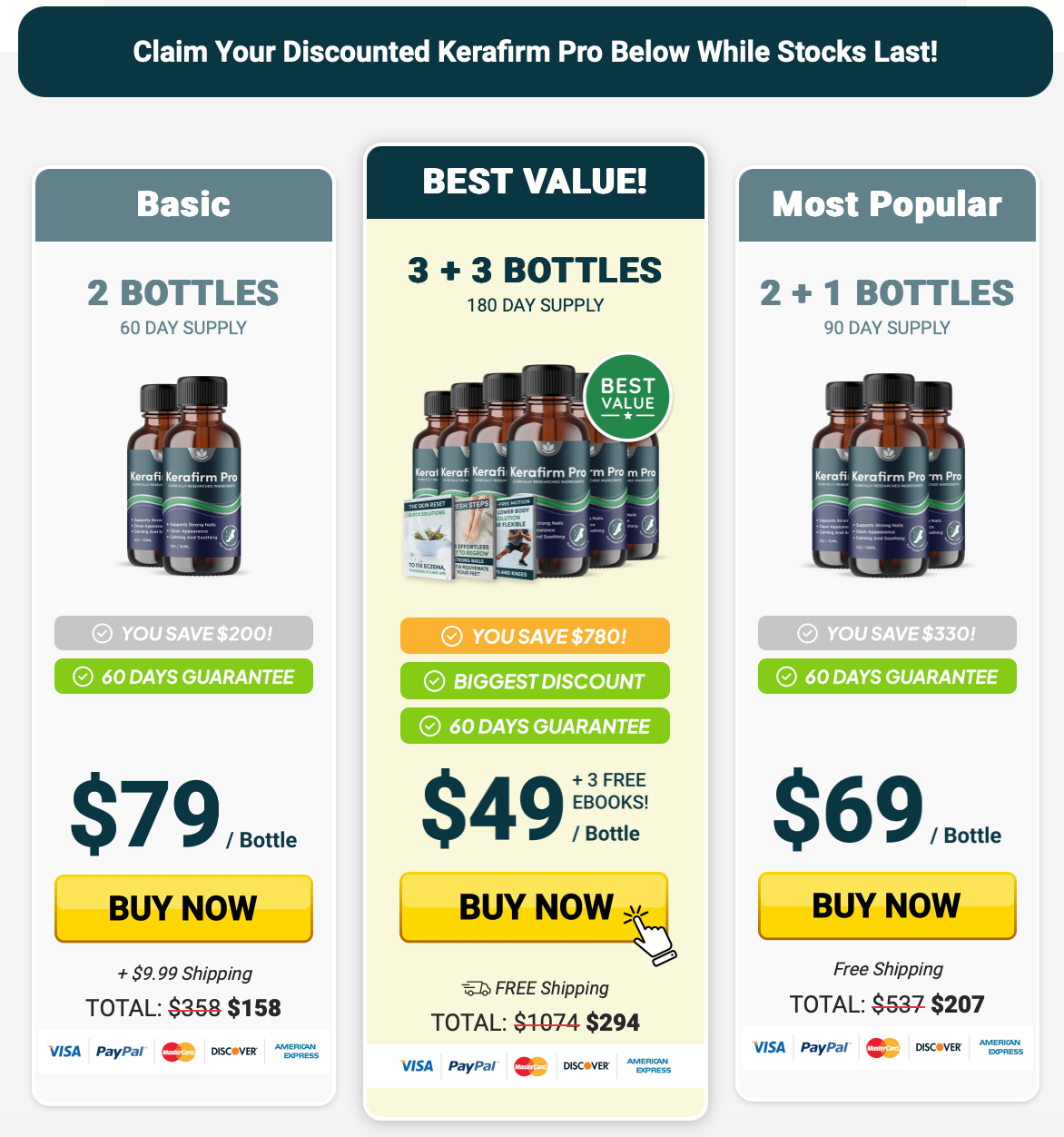
KeraFirm commercial guide
Current price, packages, shipping and merchant-route information.
Current price, packages, shipping and merchant-route information.