Ingredient Evidence Review
D-Aspartic Acid in Nitric Boost Ultra
Evidence review of D-aspartic acid in Nitric Boost Ultra, including testosterone claims, human trials, conflicting findings and dose uncertainty.
Save or follow this source
Add Male Performance Supplements to Google Preferred Sources or open this page in your preferred AI tool.
Desk ResearchEvidence LabelsSafety ContextUpdated Aug
Published Products
Explore all current MPS evidence-led product reviews.

Testosterone marketing
D-aspartic acid is commonly promoted more strongly than the human evidence supports.
D-aspartic acid (DAA) has been marketed in many male-performance and testosterone-support supplements. Interest arose partly from animal and early human observations involving endocrine signaling.
Human studies, however, have produced inconsistent results. A systematic review found only a limited number of human studies and concluded that the available evidence was sparse and contradictory. In resistance-trained men, some studies have failed to show an increase in testosterone, and one trial reported reduced total and free testosterone at a higher intake.
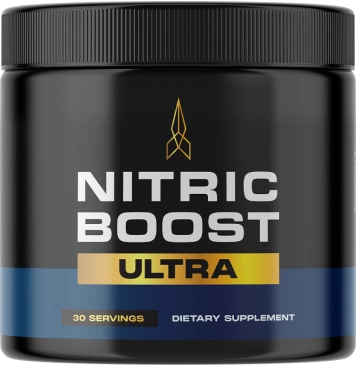
Accordingly, the presence of DAA in Nitric Boost Ultra does not justify stating that the product raises testosterone.
Why claims can become exaggerated
Animal findings, acute effects and marketing headlines are not interchangeable.
Animal / mechanistic findings
Useful for forming hypotheses, but they do not guarantee the same endocrine effect in adult men taking an oral supplement.
Human testosterone studies
Mixed and population-dependent; they do not establish reliable testosterone elevation across users.
Finished-product claim
Would require both a meaningful DAA amount and evidence that the complete formula changes relevant outcomes.
Dose uncertainty
The label needs enough detail to compare with research.
Even if a particular DAA dose had convincing evidence, a commercial product could only be compared meaningfully if its own DAA quantity were established. In the absence of a verified amount, claims about research-dose equivalence should be avoided.
More broadly, testosterone itself is influenced by time of day, energy balance, sleep, illness, medications, training and individual endocrine health. A single supplement ingredient should not be treated as a substitute for proper assessment of clinically meaningful low testosterone.
MPS verdict
Evidence is insufficient and conflicting for a dependable testosterone-boosting claim.
DAA is not one of the stronger evidence reasons to consider Nitric Boost Ultra. The formula's nitric-oxide ingredients have a more coherent evidence rationale than its testosterone-oriented marketing implications.
D-aspartic acid evidence map: ingredient plausibility versus Nitric Boost Ultra proof
The key product question is not simply whether D-aspartic acid has ever been studied. It is whether the human evidence is consistent, whether the studied population matches the user, and whether the finished formula contains a verifiable amount comparable with the research.
| Evidence layer | What this page supports | Limit for Nitric Boost Ultra |
|---|---|---|
| Mechanistic or animal evidence | Useful for explaining why DAA attracted testosterone-related research interest. | Does not establish a testosterone increase in adult men using the finished product. |
| Human testosterone studies | Results are sparse, inconsistent and population-dependent. | No dependable testosterone-boosting effect can be assumed across users. |
| Research dose | A study amount helps interpret the experiment performed. | Research-dose equivalence cannot be claimed without a verified product amount. |
| Finished formula | DAA can be evaluated as one ingredient within the formula. | An ingredient-level study does not validate the complete multi-ingredient product. |
Interpretation: the finished-product claim remains weaker than the ingredient hypothesis unless both dose transparency and product-level outcome evidence are available.
Selected references
Research trail
- The effects of d-aspartic acid supplementation in resistance-trained men over a three month training period.
- Three and six grams supplementation of d-aspartic acid in resistance trained men.
- D-aspartic acid supplementation combined with 28 days of heavy resistance training has no effect....
- D'Aniello G, et al. D-aspartic acid and testosterone: systematic review. PubMed PMID 28280794.
- Current merchant/product materials supplied for this project, reviewed August 21, . Product formulation, prices, bonuses and guarantee statements are treated as merchant representations rather than independent efficacy evidence.
References are included for research context. Evidence on a constituent ingredient does not automatically validate the finished product.
Current merchant offer
Compare the current Nitric Boost Ultra package options.
The supplied merchant materials reviewed August 21, show one-, three- and six-jar packages. Commercial terms can change; verify the live checkout before purchasing.

1 Jar · 30 Days
$69 total · $69/jar
Shipping additional in the supplied offer.
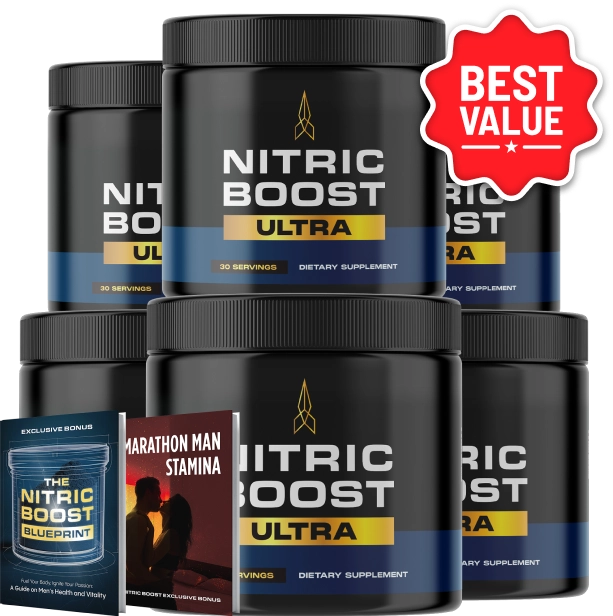
6 Jars · 180 Days
$294 total · $49/jar
Free U.S. shipping + two digital bonuses currently displayed.
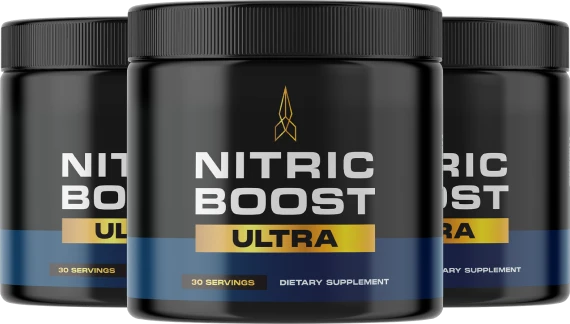
3 Jars · 90 Days
$177 total · $59/jar
Free U.S. shipping + two digital bonuses currently displayed.

Continue the research
Explore the Nitric Boost Ultra evidence cluster.
Safety & mechanism
Ingredient deep dives
L-Arginine →
L-Citrulline →
Beet Root →
D-Aspartic Acid →
Horny Goat Weed →