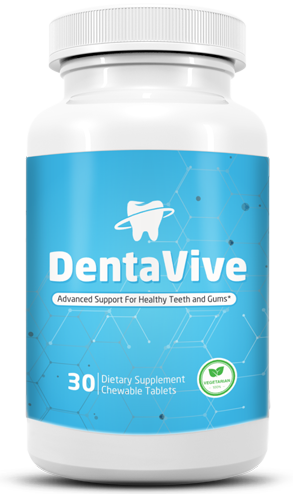
Gingivitis is inflammation of the gums, commonly linked with dental plaque. Researchers have tested selected probiotic interventions in people with gingivitis, but the pooled gingivitis results in a 2025 systematic review did not demonstrate statistically significant improvements in the main measured outcomes. That does not settle every scientific question; it means a consumer should not treat oral probiotics as proven gingivitis therapy. This page examines the clinical endpoints, compares gingivitis with periodontitis research and explains what to verify before considering a product such as DentaVive.
Affiliate disclosure: Purchase links lead to an external DentaVive merchant and may generate a commission. This page does not claim that the product treats gingivitis.
What exactly is gingivitis?
Gingivitis involves inflammation of the gingival tissues and may include redness, swelling or bleeding during brushing or professional examination. Plaque accumulation is a common contributing factor. Importantly, symptoms do not establish a diagnosis by themselves; assessment can determine whether gingivitis, periodontitis or another condition is present. Periodontitis involves loss of periodontal supporting tissues and is not merely a stronger word for gingivitis.
This difference changes how research should be read. A trial in patients undergoing treatment for periodontitis cannot automatically be used to claim a supplement benefits people with gingivitis. A periodontal adjunct study may include scaling and root planing or other professional measures, so its results reflect more than supplementation alone.
How is gingivitis ordinarily managed?
Plaque control remains central. Consistent brushing, appropriate interdental cleaning and professional dental advice address established factors behind gum inflammation. People with recurrent bleeding or persistent swelling need evaluation, because the cause and severity can differ. Product marketers sometimes present oral probiotics as a shortcut to healthier gums, but that proposition requires specific human evidence rather than a plausible microbial story.
The American Dental Association explains gingivitis and periodontal health in the context of hygiene and professional care [3]. An oral probiotic should not be used to delay needed cleaning or treatment. If significant pain, swelling, loose teeth or other concerning symptoms occur, seek timely professional help.
What did the 2025 meta-analysis find?
Benavides-Reyes and colleagues published a systematic review and meta-analysis examining 24 randomized controlled trials involving probiotics for gingivitis and periodontitis [1]. Ten trials concerned gingivitis and fourteen concerned periodontitis. The investigators considered clinical measures such as gingival index, plaque index and bleeding on probing. Their pooled gingivitis analysis did not find statistically significant benefit for the principal outcomes, while some periodontitis adjunctive analyses suggested favorable changes in certain measures.
A nonsignificant pooled result does not prove that every conceivable strain is ineffective. It also does not justify advertising that the category treats gingivitis. It indicates that the combined evidence, as evaluated, did not establish the effect being tested to the specified statistical threshold. Study differences in preparation, duration, sample and co-interventions make exact interpretation important.
| Clinical measure |
What it attempts to capture |
Why interpretation needs care |
| Gingival index |
Visible degree of gum inflammation |
Scoring method and follow-up differ |
| Plaque index |
Plaque accumulation |
Change is not necessarily lasting disease control |
| Bleeding on probing |
Bleeding during periodontal examination |
Depends on examination and clinical context |
| Pocket depth |
Periodontal pocket measurement |
More relevant to disease-specific periodontal evaluation |
These measures must not be bundled into an unspecific promise of “stronger gums.” Accurate copy names both the measured endpoint and the studied population.
Why should periodontitis studies be separated?
The gum-health literature is often discussed as one large evidence category. Yet periodontal disease stages differ, as do the treatments used. Some interventions in periodontitis research were added after professional debridement and assessed pocket-related or bleeding outcomes over defined periods. These findings are not equivalent to a stand-alone supplement healing inflammation in otherwise untreated gingivitis.
Inchingolo and colleagues' 2023 systematic review discusses studies of Lactobacillus reuteri, Bifidobacterium animalis subsp. lactis HN019 and other organisms in different periodontal contexts [2]. It also emphasizes heterogeneity and unresolved long-term efficacy. The broad oral probiotics for gum health guide places these results alongside other gum-related research; the present page deliberately concentrates on gingivitis-specific interpretation.
Does DentaVive match a gingivitis trial?
The archived DentaVive seller material names several probiotic species. That is insufficient to show equivalence with the trial interventions. It does not independently verify the current serving amounts, organism viability, strain designations or product-specific clinical outcomes. Even if a named species appears in a study, it does not follow that the marketed combination improves gingival index or bleeding on probing.
A responsible buyer should ask for the exact Supplement Facts label, current manufacturing information and any direct human evidence the seller relies upon. If a sales page claims reversal of gum inflammation or elimination of dental treatment, compare that statement against independently published results rather than accepting it as established fact. The DentaVive master review assesses the overall formula and purchasing context separately.
When symptoms should change your decision
Bleeding that persists, pronounced swelling, pain or loose teeth should trigger professional assessment rather than continued experimentation with supplements. Dentists can determine whether home-care changes, cleaning, additional periodontal treatment or investigation of another cause is appropriate. Preventing delays is especially important because not every gum condition has the same course or treatment needs.
If the main interest is general oral microbiome research rather than diagnosed gingivitis, our oral microbiome balance guide explains the ecological concepts more directly. The relevant decision is whether the available evidence answers your actual question, not whether the product appears under a popular search phrase.
Four questions to assess a gingivitis-related claim
First, identify whether the human participants actually had gingivitis. Second, check whether the tested intervention was a single identified strain or a multi-strain formula, and whether standard care was supplied to both groups. Third, confirm the measured endpoint and whether the between-group difference was statistically significant. Fourth, determine whether the DentaVive formulation is demonstrably comparable to the intervention. Any missing link limits the strength of the conclusion.
The result is a clearer distinction among a mechanism hypothesis, a clinical signal, a statistically supported outcome and a claim about a specific product. This is a more useful basis for purchasing decisions than testimonials or seller guarantees about dental disease.
Frequently asked questions
Can oral probiotics cure gingivitis?
The cited pooled research does not support such a claim. Gingivitis management focuses on plaque control and appropriate dental care. Some probiotics remain topics of investigation, but supplements should not replace clinical assessment or indicated treatment.
Why do some probiotic reviews sound positive?
Some reviews consider periodontitis trials, microbial outcomes or individual studies with favorable findings. Positive results in one context do not erase nonsignificant pooled gingivitis findings; both require accurate description.
Are gum bleeding and gingivitis identical?
No. Bleeding can be associated with gingivitis but may have other causes. A dental professional can examine the tissues and establish what is happening.
Is DentaVive proven to treat gingivitis?
No finished-product gingivitis trial has been established in the reviewed materials. General ingredient research cannot be used as direct proof of treatment efficacy for the marketed formula.
Related reading: DentaVive master evidence review · Gum-health probiotic research · Oral microbiome balance.
References: [1] Benavides-Reyes C et al. BMC Oral Health 2025;25:490. https://doi.org/10.1186/s12903-025-05888-5. [2] Inchingolo F et al. Pharmaceuticals 2023;16:1313. https://doi.org/10.3390/ph16091313. [3] ADA, Gingivitis: https://www.mouthhealthy.org/all-topics-a-z/gingivitis.
Editorial note: Desk research only; not firsthand testing. Educational material is not professional dental advice.