What is the seller’s basic formula concept?
The Spartamax merchant materials describe a multi-pathway formula rather than a single active ingredient. The disclosed ingredients can be grouped into several conceptual roles: L-Arginine and beetroot around nitric-oxide or vascular physiology; Tongkat Ali and ashwagandha around stress, vitality and hormone-related research; maca and Epimedium around libido or sexual-function positioning; and grape seed extract around vascular or antioxidant context.
That grouping helps explain the product story, but it should not be confused with product-specific proof. A pathway can be biologically plausible without demonstrating a meaningful clinical effect from the finished gummy.
Pathway 1: nitric oxide and circulation
L-Arginine is a precursor used in nitric-oxide synthesis. Human trials and meta-analyses have examined oral arginine in men with erectile dysfunction, which makes it the most directly relevant ingredient in the current formula for this pathway. Beetroot is also associated with dietary nitrate and vascular physiology.
The limitation is dose. Clinical studies evaluate defined amounts. The current Spartamax materials reviewed do not provide a current independently verified amount of L-Arginine or beetroot, so MPS cannot conclude that the product reproduces the exposure used in trials.
Pathway 2: stress, vitality and testosterone-related research
Tongkat Ali has human research relevant to testosterone, while standardized ashwagandha extracts have been studied for stress-related outcomes, testosterone and aspects of male sexual health. These ingredients make sense in a formula positioned around vitality, but the evidence is formulation-specific. The exact extract and dose determine how closely a commercial product resembles the research.
Pathway 3: libido and sexual-function positioning
Maca has limited human evidence for sexual desire or function. Epimedium and its constituent icariin are often discussed in relation to PDE5-linked mechanisms, but much of the evidence remains mechanistic or preclinical. That distinction prevents a common marketing leap: a pathway related to PDE5 does not mean the supplement functions like a prescription PDE5 inhibitor in humans.
Why the combination could behave differently from the ingredients
Multi-ingredient products can create additive, neutral or unpredictable effects depending on the amounts and formulation. Even if several ingredients have human studies individually, a combination requires its own evidence before the finished product can be credited with the same outcomes. There may also be interaction or tolerability considerations that do not appear in single-ingredient trials.
What “works” should mean in an evidence-led review
“Works” is not a single endpoint. A buyer may mean improved libido, improved erection quality, higher testosterone, greater stamina or simply better subjective confidence. Each outcome requires different evidence. MPS therefore avoids a single yes/no claim and asks whether the relevant ingredient evidence, dose and finished-product data support the specific outcome being discussed.
What Spartamax has not established
MPS did not identify a peer-reviewed randomized trial of the finished Spartamax formula. The current evidence also does not justify describing the product as a treatment for erectile dysfunction, a replacement for prescription therapy, a tissue-regeneration product or a clinically proven testosterone intervention. Those are materially stronger claims than the available data support.
Evidence boundary: the disclosed formula provides a plausible rationale for why the seller positions Spartamax around circulation, vitality and libido, but the finished product should not be presented as clinically proven merely because individual ingredients have related research.
Practical takeaway
The most credible explanation is that Spartamax combines ingredients associated with several male-vitality pathways. L-Arginine and Tongkat Ali have comparatively stronger human evidence for defined outcomes; ashwagandha is promising but extract-specific; maca is limited; Epimedium is largely mechanistic; and beetroot/grape seed provide indirect vascular context. The unanswered question is whether the actual finished gummy delivers these ingredients in forms and amounts sufficient to reproduce study results.
Frequently asked questions about the mechanism
Does Spartamax work by increasing blood flow?
The seller uses circulation-oriented positioning and the formula includes ingredients associated with nitric-oxide or vascular research. That supports a plausible mechanism discussion, but it does not establish a finished-product blood-flow outcome without product-specific testing.
Does Spartamax raise testosterone?
Tongkat Ali and some standardized ashwagandha extracts have human research relevant to testosterone. MPS does not infer that Spartamax itself raises testosterone because the exact extract specifications and doses remain unverified.
Does Spartamax work immediately?
No product-specific clinical evidence identified by MPS establishes a validated immediate onset. Promotional claims suggesting instant prescription-like effects should therefore be treated as marketing rather than demonstrated product performance.
A practical way to judge whether the mechanism matters
Ask three questions for each claimed pathway. Is there human evidence for the ingredient? Is the product dose and extract comparable with that evidence? Has the finished formula itself been tested for the claimed outcome? Spartamax currently performs differently across those three levels: several ingredients have relevant research, dose comparability is not fully verifiable, and MPS did not identify a product-specific randomized trial.
This framework prevents a common error in supplement marketing—treating a plausible mechanism as if it were a demonstrated clinical result.
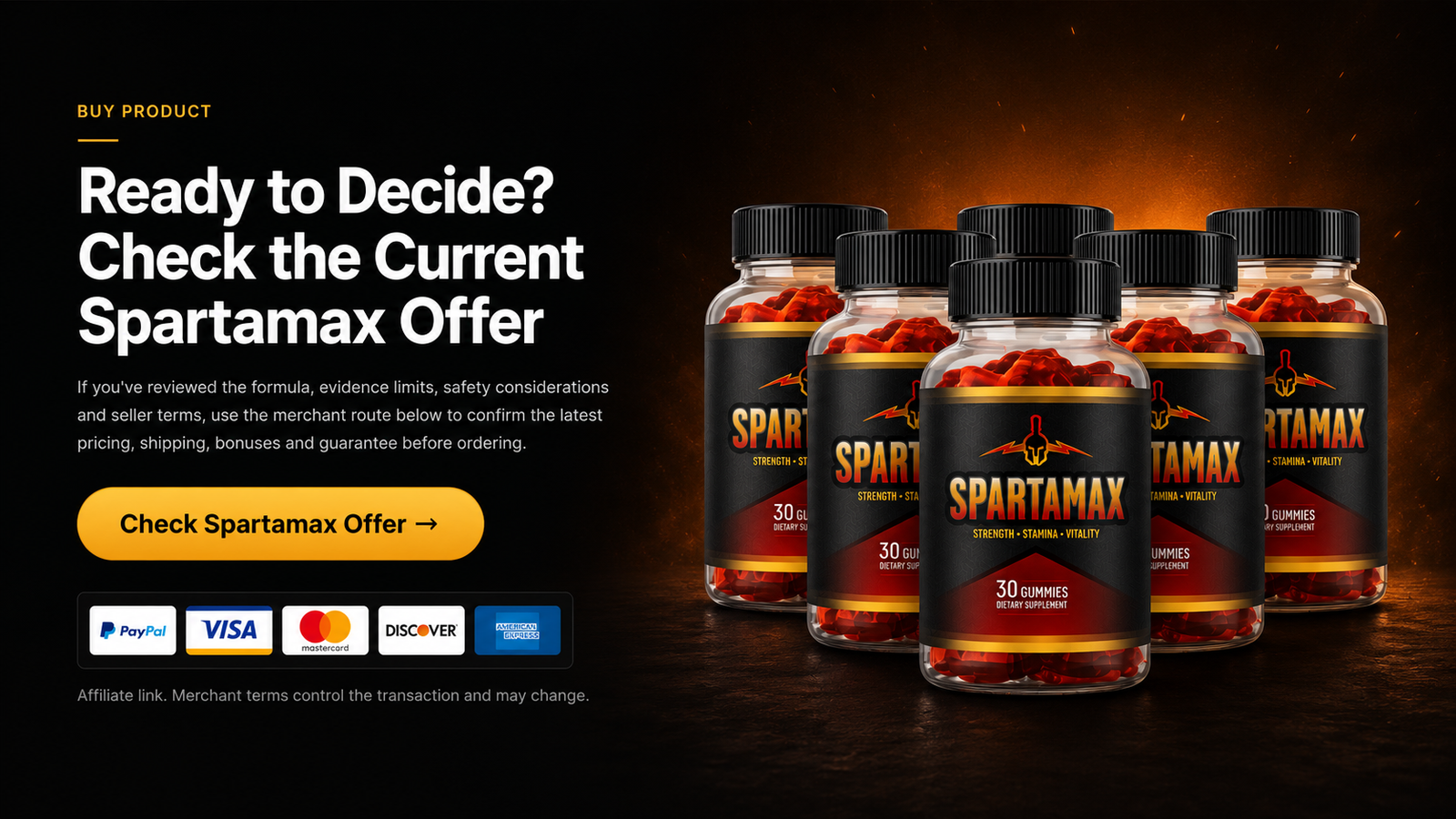
BUY PRODUCTCheck the Current Spartamax Offer
Merchant pricing, shipping, bonuses and guarantee terms may change. Confirm current terms before ordering.
Check Spartamax Offer →