
Safety Guide
Supplement Side Effects: What to Expect and When to Stop
Not every unwanted effect is equally serious. Mild tolerability problems and severe adverse reactions should not be treated as the same thing.
Save or follow this source
Add Male Performance Supplements to Google Preferred Sources or open this page in your preferred AI tool.
Direct answer: Side effects depend on the ingredient, dose, product quality, medication use and individual susceptibility. Unexpected or severe symptoms should not be normalized as a 'detox' response or ignored simply because the product is a supplement.
Check supplement-drug interactions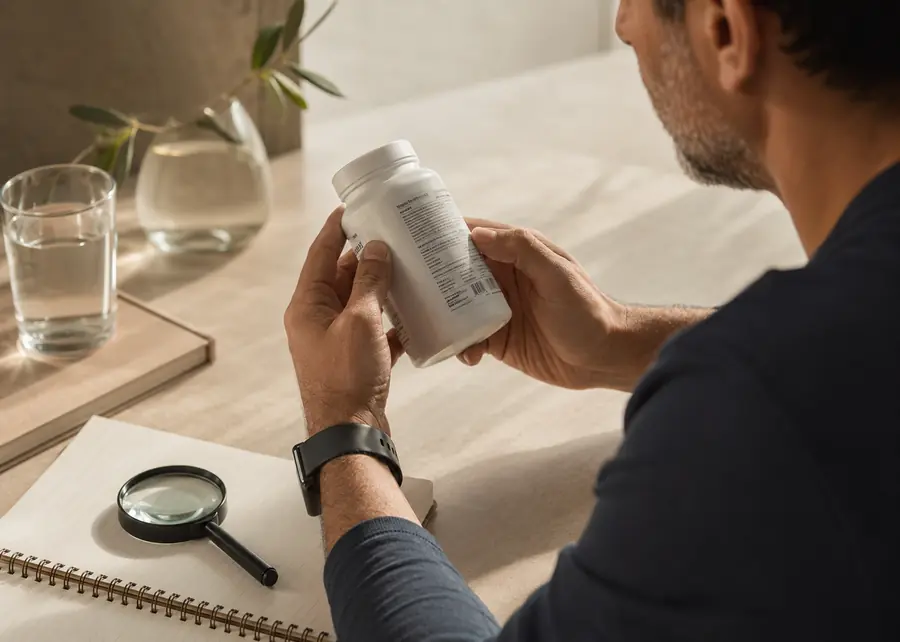
Published Products
Explore all current MPS evidence-led product reviews.


Some products can cause gastrointestinal, stimulant-related or other mild effects depending on the ingredient and dose.
Severe allergic, cardiovascular, neurologic, liver, kidney or bleeding symptoms require a different level of concern.
Serious adverse events can be reported through current FDA channels and should be documented with product and label information where possible.
Stop and reassess unexpected effects
A new symptom after starting a supplement deserves attention rather than an assumption that discomfort proves the product is working.
Use the right level of care
Serious or rapidly worsening symptoms require appropriate medical attention rather than online troubleshooting.
Why supplement side effects happen
Dietary supplements contain biologically active substances, so unwanted effects are possible even when a product is sold without a prescription. Risk can rise with higher doses, multiple products, medication interactions, individual sensitivity, contamination or an ingredient that is inappropriate for a particular medical context. A side effect should be evaluated according to the ingredient and symptom rather than assuming all supplements share the same risk profile.
Common tolerability effects
Depending on the ingredient, some users may experience gastrointestinal discomfort, nausea, loose stools, constipation, headache, sleep disturbance, jitteriness or other relatively mild effects. These examples should not be read as a universal expected list. An ingredient page or product review should provide more specific safety information when good evidence exists.
High doses and stacking
Taking more than the label amount or combining several products can increase exposure. A multivitamin, testosterone-support product, pre-workout and sleep formula may duplicate vitamins, minerals, stimulants or botanicals. The total daily regimen matters more than the apparent dose in any single bottle.
Allergic and hypersensitivity reactions
A supplement can contain botanical ingredients, excipients, flavors, capsule materials or other components capable of provoking an allergic or hypersensitivity reaction in susceptible people. Rapid swelling, breathing difficulty or other severe allergic symptoms require urgent medical attention rather than observation at home.
Serious adverse reactions
FDA's current dietary-supplement reporting materials list serious reactions such as marked changes in heart rate or blood pressure, loss of consciousness, severe persistent gastrointestinal symptoms, signs of liver injury, abnormal bleeding and other major symptoms as reasons for concern. The exact emergency response depends on the symptom and local medical system; serious or rapidly worsening symptoms should receive appropriate urgent care.
Do not normalize severe symptoms as 'detox'
Marketing communities sometimes frame pain, severe gastrointestinal effects, palpitations or other reactions as proof that a supplement is 'working' or causing detoxification. That is not an evidence-based safety principle. Unexpected symptoms should be assessed on their own merits, particularly when they are intense, persistent or temporally related to starting a new product.
Side-effect triage map: separate tolerability from potentially serious reactions
Not every unwanted effect belongs in the same risk category. A practical response depends on severity, timing, the ingredient and dose, medication use, and whether symptoms are worsening or involve a potentially serious system.
| Situation | Interpretation | Safer next step |
|---|---|---|
| Mild, expected tolerability issue | Some ingredients can cause gastrointestinal, stimulant-related or other dose-related effects. | Stop and reassess the product rather than assuming discomfort proves effectiveness. |
| New symptom with medication use | The symptom may reflect the supplement, the medication, or an interaction. | Review the complete medication and supplement list with an appropriate professional. |
| Severe or rapidly worsening reaction | This is qualitatively different from ordinary tolerability. | Seek appropriate medical attention rather than relying on online troubleshooting. |
| Suspected serious adverse event | Product identity, lot information and the current label can be important for documentation. | Preserve the product information and use the appropriate adverse-event reporting pathway. |
Interpretation: “side effect” is a broad label. Severity and clinical context determine whether the appropriate response is simple discontinuation, professional review or urgent care.
When to stop a supplement
FDA's current consumer guidance advises stopping use and seeking medical advice or care when an adverse event occurs. A user experiencing a concerning reaction should not repeatedly re-challenge themselves simply to prove causation. Prescribed medicines, however, should not be stopped or changed without appropriate professional advice unless emergency clinicians direct otherwise.
Preserve the product information
After a suspected reaction, keep the bottle, label, serving instructions and lot information if available. Record when the product was started, the dose taken, other supplements or medicines used, and when symptoms occurred. This information can help a clinician, manufacturer or regulator assess the report.
How FDA adverse-event reporting works
FDA encourages consumers and healthcare professionals to report adverse events related to dietary supplements. FDA's current consumer page directs users through its modern reporting routes, including its SmartHub pathway, and notes that serious adverse-event reports received by supplement firms are subject to reporting requirements. The reporting route should be rechecked immediately before publication because agency systems can change.
A report does not automatically prove causation
Post-market adverse-event reports are signals. A symptom may be related to the supplement, an interaction, an underlying condition or another factor. A single report usually cannot establish causation on its own, but reporting still matters because patterns across reports can help identify previously unrecognized safety problems.
How this page should be used
Use this guide to understand the difference between mild tolerability issues and reactions that deserve more urgent attention. For ingredient-specific risks, consult the relevant ingredient guide. For medication combinations, use the Supplement Drug Interactions guide. For severe symptoms, online content should not delay appropriate medical care.
Why ingredient-specific pages remain necessary
A general safety guide cannot replace ingredient-specific evidence. Creatine, ashwagandha, zinc, stimulants and multi-herb blends have different adverse-effect and interaction profiles. This page therefore provides the decision framework, while individual ingredient and product pages should identify relevant risks and dose issues for the specific formulation under review.
Dose-response and individual sensitivity
Some adverse effects become more likely as dose increases, while others can occur unpredictably in susceptible individuals. That is why a dose tolerated by one person does not establish safety for another. Starting a new multi-ingredient product also makes it harder to identify which component is responsible if symptoms appear.
Why rechallenge can be risky
If a concerning reaction improves after stopping a supplement, deliberately restarting it to see whether the symptom returns can create unnecessary risk. Formal causality assessment in medicine uses several lines of evidence; consumers do not need to reproduce an adverse reaction themselves. Serious symptoms should be evaluated clinically rather than through self-experimentation.
Frequently asked questions
Are side effects the same for every supplement?
No. They depend on the ingredient, dose, product and individual.
Should severe symptoms be treated as a detox response?
No. Serious or rapidly worsening symptoms warrant appropriate medical attention.
Should I keep the bottle after a suspected reaction?
Yes. The label and lot information can be useful when seeking care or reporting the event.
Does an adverse-event report prove the supplement caused the reaction?
No. A report is an important safety signal but does not by itself establish causation.
Sources
Authoritative sources and operational records supporting the page.